Several years ago, I got a hold of French-Korean author Elisa Shua Dusapin’s novel Hiver à Sokcho by chance. Given its relatively short length, it was a quick read and I was able to finish it in one sitting. However, the way Dusapin explored the novel’s major themes of isolation and longing for independence, while using a wintry and bleak Sokcho as backdrop, stayed with me.
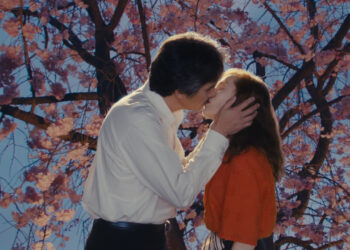
Winter in Sokcho, French-Japanese filmmaker Koya Kamura’s adaptation of the book, closely follows its source material, save for a couple of key plot points in the narrative. And although it falls short in certain aspects in its attempts to fully explore the protagonist’s introspections, the film nonetheless effectively conveys the overarching sense of desired connection and contrasts it with a self-imposed sense of isolation.
In the bitter winter months of the small seaside tourist village of Sokcho, we see Soo-ha (Bella Kim in a poignant, multilayered performance) live a life governed by routine, which is only enlivened by Soo-ha’s relationship with her aspiring model boyfriend, and by weekly visits to her mother who works as a fishmonger. During the day, Soo-ha works at a local boarding house to help the lodge’s recently widowed and lonely elderly owner. When with her mother, she helps with preparing seafood, including the deadly fugu (pufferfish), as well as in attending to her mother’s customers in the market.

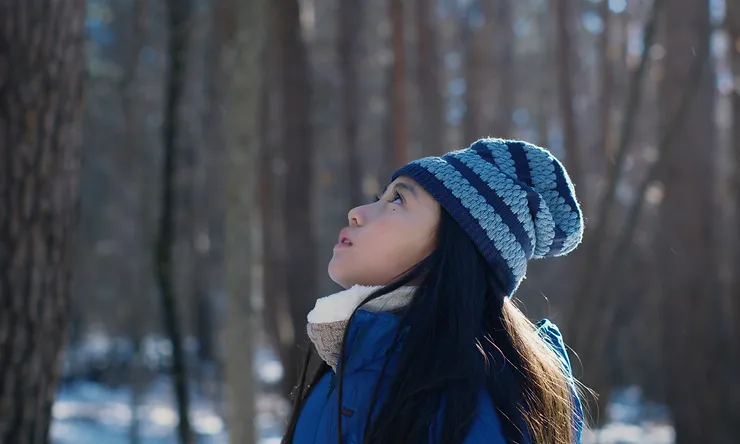
From the get-go, Kamura and cinematographer Élodie Tahtane already clue us into the quaint but bleak atmosphere of wintertime Sokcho. Through Kim’s nuanced portrayal of Soo-ha, we see it in her character as well. Somehow, she feels trapped in the place, especially during this time of year when Sokcho becomes even more remote and isolated. Her life, after all, is marked by monotony — working at the lodging house, caring for her mother, and observing the same landscapes over and over.
Adding to this, we get to discover Soo-ha’s mixed-race identity, as hinted upon by a neighbour who calls her “Miss France” and her employer who teases her about “following the French Time Zone” as the reason for her tardiness. As someone who is half-French and half-Korean, Soo-ha’s ambivalence to her French heritage is largely informed by her mother’s stories, making her essentially bury that part of her.
Her peaceful yet dreary existence, however, gets upended with the arrival of a French man named Yan Kerrand (Roschdy Zem) who checks into the guesthouse where Soo-ha works. For his own part, Kerrand, an artist of some renown, chose to stay in Sokcho for the very bleakness Soo-ha seems to be conflicted about. Determined to find inspiration for his next work in the desolate landscape, Kerrand sees Sokcho’s remoteness and coldness as an embodiment of the kind of emotional detachment or liminality he wants to explore in his work. He feels as though his unfamiliarity with the place would fuel his creative process.
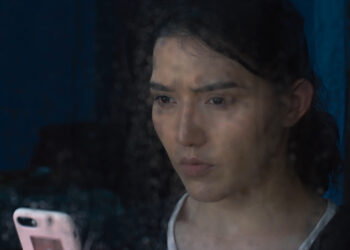
Kerrand’s arrival, on the other hand, awakens within Soo-ha questions about her own identity, as well as that of her French father, of whom she knows almost nothing. More importantly, his presence triggers a deep curiosity and a kind of internal conflict, a reminder of the part of her identity that she feels disconnected from. She then develops a genuine interest in him, even going so far as rummaging through his drawings when he isn’t around, secretly watching him through a peephole from the next room as he draws, and watching his interviews online that reveal tidbits of his very private life.
With Soo-ha’s increasing curiosity about his work and his life and Kerrand’s wish to experience “authentic” Korea, the two strike up an uneasy relationship, mostly centred on food and drawing. They visit snowy mountaintops, check out the local restaurants, and even cross into North Korea. Nevertheless, while Kerrand wants the real Korean experience, he prefers not to participate in it. Instead, he only wishes to play the role of an outsider just passing through, sketching the town, the people, and the cold, barren landscapes.
As winter settles over the town, Son-Ha and Kerrand spend the rest of the season observing and gauging each other, trying to communicate any way they can, either through cooking or drawing, delicately weaving a fragile bond between them. Having said that, the clash of ideology — one wishing to forge a genuine connection with a kindred isolated soul, the other adamant about keeping everyone at arm’s length — slowly builds up, leading to a confrontation that never really takes interest in addressing or resolving anything. And before they knew it, winter has passed them by.
Overall, Winter in Sokcho stays faithful to its source material. The film’s screenplay, which Kamura co-wrote with Stéphane Ly-Cuong, touches on Soo-ha’s complicated relationship with Sokcho. Though she feels alienated from the town in many ways, she also demonstrates a kind of intimacy with it, particularly through food. Kamura’s depiction of food — from the fish her mother sells and the Korean dishes they prepare, to the scenes where they eat to evade answering awkward questions — plays a critical role in portraying Soo-ha’s comfort and discomfort.
I appreciate the directorial choice to depict Soo-ha’s deepest thoughts, feelings, and insecurities through animated sequences. Thanks to Agnès Patron’s masterful abstract animation, we get a glimpse of Soo-ha’s raw emotions. The recurring animated sequences featuring a woman’s naked body exploding and dissolving, as well as a flying fish finally swimming free, symbolise the character’s body dysmorphia, fear of attachment, and her longing to break free from the shackles of stunted relationships.
Despite this, the filmmakers never really delve into Soo-ha’s fraught feelings about her own body, which could have been a subplot worth fleshing out. She is conscious of her appearance and worried about her weight and beauty. It doesn’t help that even her mother and boyfriend remark that she should consider getting surgery for breast enlargement and rhinoplasty, while remarking that she needs to maintain a diet even though she isn’t fat. This discomfort, depicted through the animation sequences and shown while she observes fellow naked women showering at a spa she frequents with her mother, reflects her larger sense of emotional dislocation and the pressures of conforming to societal expectations.
Also, what the film does, while relatively being faithful to Dusapin’s work, is to make the already-vague novel even more ambiguous. By not examining the latent tension between the two characters even further, Winter in Sokcho misses out on the opportunity to depict a nuanced kind of attraction and intimacy — something that’s more subdued, intellectual, even spiritual, all intertwined with a deep emotional hunger. To me, this is important, since without showing this complicated dynamic underscored by sexual underpinnings, how Kamura ends the film instead doesn’t feel earned.
Even so, Winter in Sokcho is a nice film. As an exploration of the complexities of cultural identity set in the cold Sokcho winter, I enjoyed peeling through its many layers to reveal another story within a story. I just wished director Kamura could have examined some of them even further. Ultimately, though, she succeeds in directing a film about two people in isolation where one yearns for a genuine connection spurred by a maelstrom of feelings and the other prefers a distant and intellectualised approach to keep his emotions at bay.