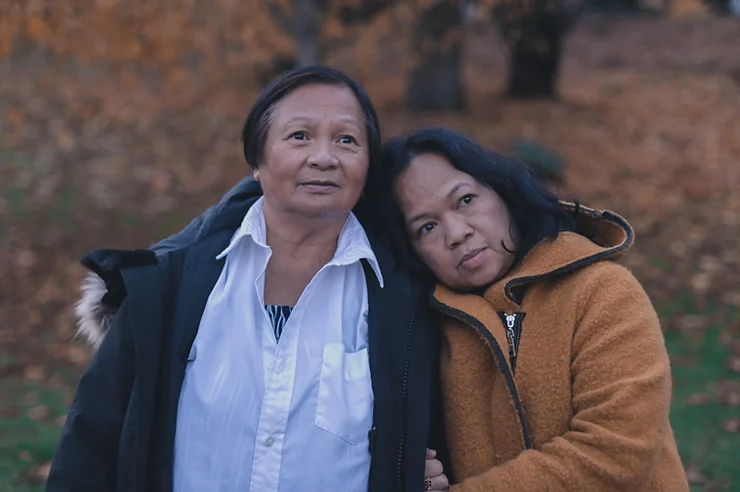
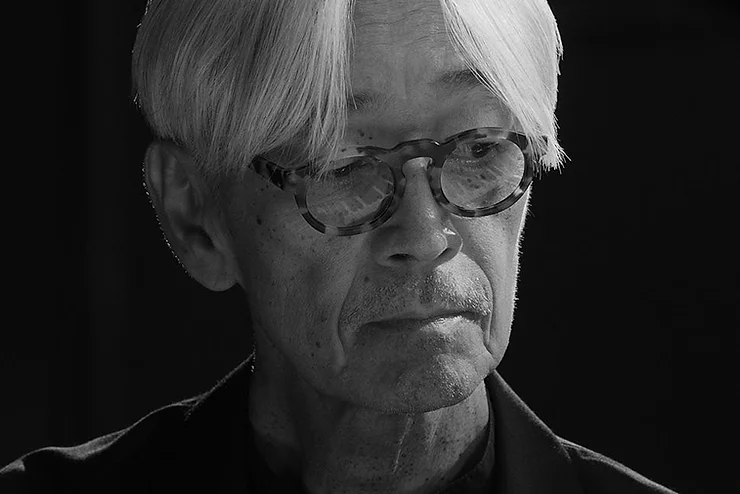
There’s something familiar to me about documentaries made by daughters trying to figure out who their fathers were before they became their fathers. I’ve encountered it recently in Karla Murthy’s The Gas Station Attendant, where old conversations between father and daughter gradually opened into a portrait of immigrant labour, and in Sura Mallouh’s 15 Ways My Dad Almost Died, which used animation to reconstruct episodes from her father’s life that she had never known about.
Ashley Da-Lê Duong’s Ba’s Book belongs somewhere in that family of films, though its way of getting there is considerably messier.
The titular “Ba” is Duong’s father, Anh Duong, whose memoir began as letters to his daughter. His stories reach back to childhood in wartime Vietnam, his eventual departure from the country, and another brush with political upheaval after arriving in Iran during the revolution. Duong grew up with a father who didn’t readily discuss much of this. The book gave her access to a version of him she hadn’t known, and her film takes the unusual next step of bringing those memories back to the people and places that produced them.
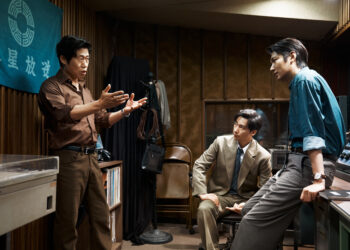
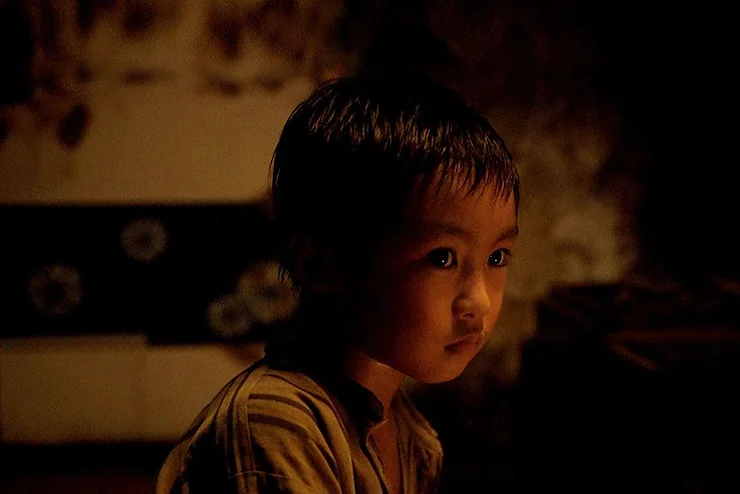
That means Ba’s Book is part documentary, part reenactment, and occasionally, almost a stage play. Duong and her family reconstruct scenes from Anh’s childhood, with younger relatives and actors standing in for people who are sometimes sitting nearby watching their own memories being performed. The old family home is rebuilt as a set. Anh corrects details. His relatives remember things differently. Someone who claims not to remember much suddenly notices that a costume or gesture is wrong.
I’m of two minds about that approach.
There’s something undeniably clever about watching memory become physical. Instead of asking relatives to sit for another round of talking-head interviews about war and displacement, Duong gives them objects, bodies, rooms, and situations to react to. Details return because somebody gets a pair of shoes wrong or bends down too quickly. Artifice is part of the point: recreating the past exposes just how unstable any supposedly definitive version of it can be.
But I wasn’t always convinced by the reenactments themselves. Sometimes the device made me more aware of the construction than of Anh’s experience. The Gas Station Attendant worked partly because Murthy trusted actual conversations with her father and allowed their epistolary quality to carry the emotion. 15 Ways My Dad Almost Died moved in another direction altogether, using animation to acknowledge that some traumatic memories can only be reconstructed rather than recovered. Ba’s Book sits between documentary evidence and performed memory, and there were moments in the film that could have benefitted from committing more to either mode, which would have allowed them to hit harder.
But then somebody laughs, interrupts the scene, corrects the past, or looks at Anh in a way that no reenactment could manufacture, and the movie finds itself again.
It’s these moments that carry me through my reservations. Duong clearly loves her father, and it’s touching to witness the sheer amount of effort involved in trying to understand him. She doesn’t seem interested in reducing Anh to the wars and revolutions he survived. Those events shaped him, of course, and the film never minimizes the displacement or generational trauma they produced. But the real subject is what happens afterward, when a person survives enormous historical events and then builds a family that inherits consequences it never directly experienced.
For audiences in the Vietnamese diaspora, and probably for many children of immigrants more generally, that gap should be recognizable. Parents can arrive carrying entire histories their children know only in fragments, if at all. Sometimes those histories become family mythology. Sometimes nobody mentions them. The second generation grows up knowing something happened without necessarily knowing what, while parents who survived it may have spent decades learning that survival required moving forward rather than explaining themselves.
Anh wrote a book and his daughter made a movie. Even that exchange says something about them.
Ba’s Book can be unexpectedly funny as family memory usually is. A story that begins with war can suddenly become an argument about how somebody stood in a room. A relative who seems reluctant to discuss the past turns into an unofficial historical consultant once the reenactment gets something wrong. Trauma remains present, but Duong understands that families don’t spend every waking moment solemnly processing it. People tease one another. They contradict each other. They get impatient. They remember absurd details.
The film becomes most affecting when its experiment allows those personalities to interrupt the project Duong thought she was making. Anh’s memoir may provide the structure, but once his siblings and relatives enter the process, it no longer exclusively belongs to him. His memories remain his memories; they just aren’t the only memories anymore. A family history starts multiplying in front of the camera.
Despite this philosophical approach, I still wanted a little more formal clarity from Ba’s Book. The hybrid technique can be fascinating one moment and distancing the next, and its ambition occasionally exceeds what the staging itself can accomplish. Yet I can’t dismiss the method when the method is also what brought this family together to talk.
Maybe that’s the simpler achievement beneath all the formal experimentation. Duong begins with a book written by her father and ends up making something with him and for him. She may never completely know the man who existed before she did. Children rarely do. But making Ba’s Book somehow gets her closer.