“He’s as stubborn as you are,” playful chides Zaya (full name, Otgonzaya Dashzeveg) at her husband Daava (Davaasuren Dagvasuren) as they watch over their horses, observing a particularly defiant stallion at work whom they must deal with. It’s one of the many small, intimate moments of observation we get to share with this young Mongolian couple in Gabrielle Brady’s The Wolves Always Come At Night. It’s a striking hybrid of documentary and fiction that follows Daava and Zaya, peering into their way of life in the Mongolian countryside, until it is disrupted and they must transition to the city. Through this journey, we are presented with a narrative of migration, upheaval, and change, carrying a poignant remembrance and longing for home.
For Daava, Zaya, and their four young children, home is in Ulaanbaatar, in the Bayankhongor region, where they are part of generations of herders. Tending to animals is their way of life and Brady introduces this eloquently as we watch them care for lambs giving birth and brush their horses. The camera never feels intrusive, and it really feels that we are simply watching Daava and his family live their lives, spending time with one another and their animals in ease and contentment. This makes the sudden upheaval of their lives after a devastating severe sandstorm all the more potent.
Brady, who lived in Mongolia in her twenties, wanted her return to have a quality of finding the “quiet loss…the shadow of this story” of the country, as she shares in the press notes for the film. Compared to her previous experience in Mongolia, the threat of climate change has become an ever-present threat to the lives of herders, and the urgency of conveying this heartbreaking predicament to the world is very much apparent in the film. Through Daava and Zaya we find an empathetic centre where we feel every deep cutting loss they endure. In a particularly heartbreaking scene, we watch Davaa exhausted and despondent, sitting on a fence, unsure of what to do. “What kind of a herder am I?” His way of life has been so quickly torn away from him, a shadow of the calm and assured individual we had been introduced to earlier. And yet, he persists in fighting on with his family as they look towards the uncertain future.
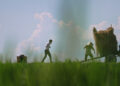
In the aftermath of the devastating circumstances, the family begins their tumultuous relocation, which involves them selling off horses and moving to an overpopulated district on the outskirts of the city, which is hectic, overpopulated, and polluted. These scenes were the first to be filmed for the documentary, and as we watch the family assimilate to their reality, there’s an added poignancy to seeing them adapt to their new life in this most grounded, documentary form. In contrast, the earlier scenes of the film, many which were filmed in retrospect as “fiction,” have another layer of heartbreak to them as we are watching them enact their previous lives with such a bittersweet quality. Brady worked with Daava, Zaya, and cinematographer Micheal Latham to give these scenes a serene, lived-in quality that carries nostalgia and remembrance of what has been lost. The immersive camerawork captures every inch of the sweeping vistas and makes the shift to the family’s current situation all the more crushing.
The Wolves Always Come At Night achieves a multitude of aims through its carefully constructed approach, where we get insight into this specific family and their way of living, and how it gets upended, while also serving as a warning against the dangers of global warming and how the changing climate can impact lives so irrevocably. Extensively researched, shot, and edited together, the film grants us a look at the painful experiences endured, but also provides a sliver of hope in Daava and Zaya’s love, unity, and poignant determination to survive and possibly return to the way things used to be, no matter how slim the possibility.