When I greet Chie Hayakawa with a slightly nervous hajimemashite at the start of our Zoom conversation, she smiles and greets me back with what seems like mild amusement. It is late evening for both of us as I tell her that I am calling from the Philippines, while she joins from Japan. We are also joined by artist and filmmaker Monika Uchiyama, who serves as the director’s interpreter. For a conversation about her latest film Renoir, this feels like an appropriate arrangement. This is, after all, a film interested in feelings that sit just before language, or maybe just beyond it.
That is more or less how Hayakawa describes it when we speak. While Plan 75 was a film she could explain clearly in words, Renoir, she says, is her attempt to portray “feelings before they are named” and “things that exist before language.”
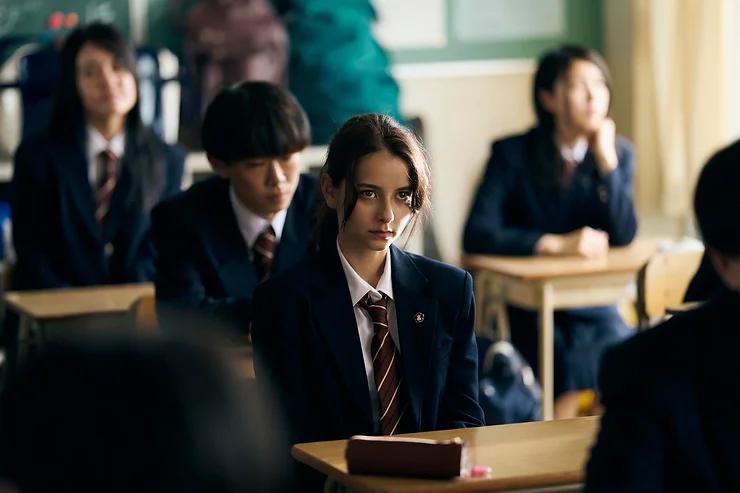
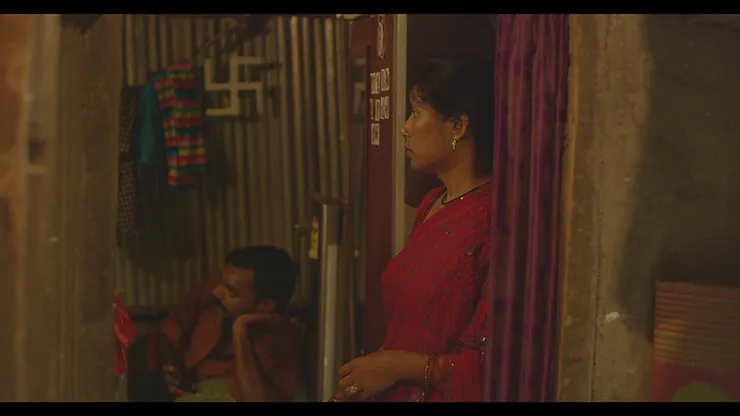
Set in late-1980s Japan and seen through the eyes of a young girl, the film drifts through small scenes and emotional fragments that only reveal their full force over time.
In our conversation, I tell Hayakawa that I feel her two films both have a fascination with death, and she responds that she traces both movies back to the same source: growing up alongside a father battling cancer. Thoughtful and deliberate in her answers, she takes her time before responding, whether talking about grief and guilt or expressing her admiration for Yui Suzuki, the first-time child actor starring as Fuki in Renoir.
Even the title, Hayakawa tells me, took on a different meaning upon its premiere at Cannes last year, with viewers comparing Renoir to an Impressionist painting: scattered colours, fleeting impressions, fragments that only gradually form a whole. For what it’s worth, it is a neat description of the film’s method, and maybe of Hayakawa’s cinema more broadly, which keeps returning to mortality, not as an abstraction, but as something intimate, elusive, and painfully human.



This interview has been edited for brevity and clarity.
The Asian Cut: You’ve said before that Renoir draws from your childhood, particularly your father’s illness. Was there a moment or image from your own memory that unlocked the film for you?
Chie Hayakawa: Rather than the film being based on my memories, it’s actually more of when I was a child, I already knew that I wanted to make a movie like this. So it was more that I had turned those childhood desires into reality.
I was thinking about Plan 75 when I watched Renoir. Plan 75 looks outward at society, while Renoir feels much more internal. It feels almost like everything is happening inside the child’s mind. But I think both films deal with death, although from opposite ends of life — old age versus childhood. With this shift in perspective, did your approach to storytelling change? Or is this just another side of the same voice?
When I was making Plan 75, I wondered why I was so interested in the topic of death. When I reflected on this, I realized that it was because as a child I had lived alongside my father who had cancer.
So I agree that both films share this core theme of death, but I knew that I wanted to take a different approach with Renoir. With Plan 75, the project itself was quite controlled. I could explain very clearly, with words, why I wanted to make the film and what I wanted to depict.
But with Renoir, I wanted to focus more on themes that were ineffable and difficult to explain or put into words.

I felt like Renoir is less about grief itself and more about the suspension before grief fully arrives. The waiting, the not knowing. Was that something you were consciously trying to capture?
Fuki, being a child, doesn’t understand what death is. She even has a kind of attraction towards this idea of death in that it is almost like a fantasy to her. So it’s not just something that can be reduced to sadness.
But when she loses the person that is closest to her and understands that she will never see that person again and that there’s going to be this void, it’s not until she experiences that for the first time that she’s able to understand it. Until then, death is less of something that is sad and more of something that is admirable, one that she’s drawn to.
Since the film is basically seen through the eyes of a child, what can you tell me about working with Yui Suzuki, who plays Fuki? What was the collaborative process like, especially for a character who observes more than she expresses?
When I cast Yui, I gave her the script and I explained what the project would be about. But I didn’t explain to her how I’d like her to play the role. She was allowed to be very free in acting out each of the scenes. I remember on set, every day it felt like a surprise in that I couldn’t understand how she was able to act in such a way.
I think that if I’d cast someone [else] who didn’t have the sensibility that Yui had, I don’t know how I would have directed a child actor to lead them toward this kind of expression. So I feel very lucky to have met her and be able to cast her in the film.
I’d like to contrast Fuki with the adults in the film. The adults often feel distant, even emotionally unavailable. Were you trying to reflect how children perceive adults during moments of crisis?
I remember as a child, adults felt very mysterious to me. I thought they were perfect people, but slowly I realized that adults are lacking many things, too. They have weaknesses and their own kind of stupidity.
Once you begin to see that, then you begin to understand them a little bit more. I think of Fuki as a person who is right at the edge of that point in time where she’s beginning to see the true nature of adults.

The title immediately evokes Pierre-Auguste Renoir and his focus on light and fleeting moments. Was that something you had in mind when choosing the title, or did the connection come later?
Originally, I was just interested in the gap between the film being about a young girl living in late-1980s Japan and the title being the name of a French painter.
But when I first premiered the film at Cannes, I actually received a lot of questions regarding the title, and people implied that the film itself was kind of like an Impressionist painting. They were saying that if the paintings are about all the colours blending together and an image emerging from those blending colours, this film similarly is made up of all these small scenes and anecdotes and moments that all come together to create a bigger narrative.
I kept being asked about whether this Impressionistic quality led me to the title of Renoir, and I almost wanted to say yes [laughs], because I do feel that the title fits the film very well.
If Plan 75 asks a question about how society treats life, what question do you think Renoir is asking?
[Long pause] The question would be, “Are we able to understand the pain of others?” That was the question at the top of my mind when I began writing the script.
When I was growing up with my father who was battling cancer, I was very aware of the fact that I couldn’t feel his pain, and that led me to feel quite a lot of guilt. I knew that was something that I wanted to depict in the film.
So yes: Can you understand the pain of others?