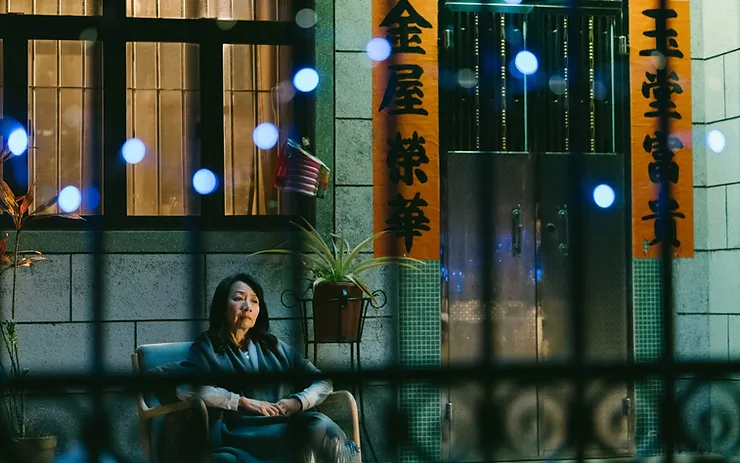
After a very successful world premiere at Sundance earlier this year, Stephanie Ahn’s Bedford Park made its international premiere as part of the Discovery program at this year’s edition of the Toronto International Film Festival.
The film is a well-crafted exploration of love in all its forms, and leans on elements of the Asian immigrant narrative backbone, while still standing firmly as a rather unique story in its own right.
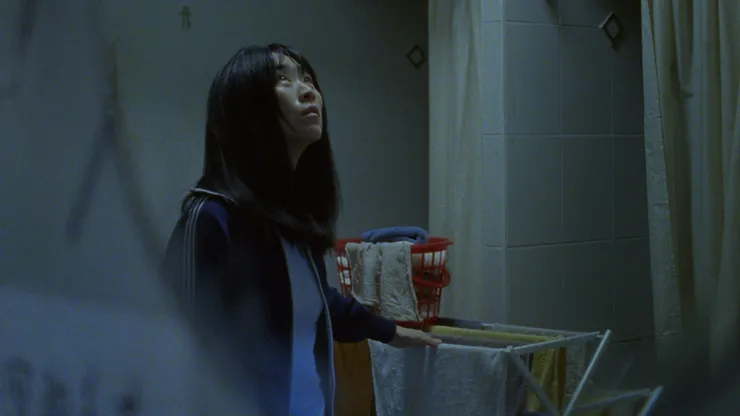
Centering around Audrey (Moon Choi) and Eli (Son Sukku), two strangers who meet under tense and conflicting circumstances, Bedford Park follows the evolution of a relationship that naturally progresses into a romance. But how it gets there, and why it should (or shouldn’t) get there is what makes the film such a remarkable arrative feat.
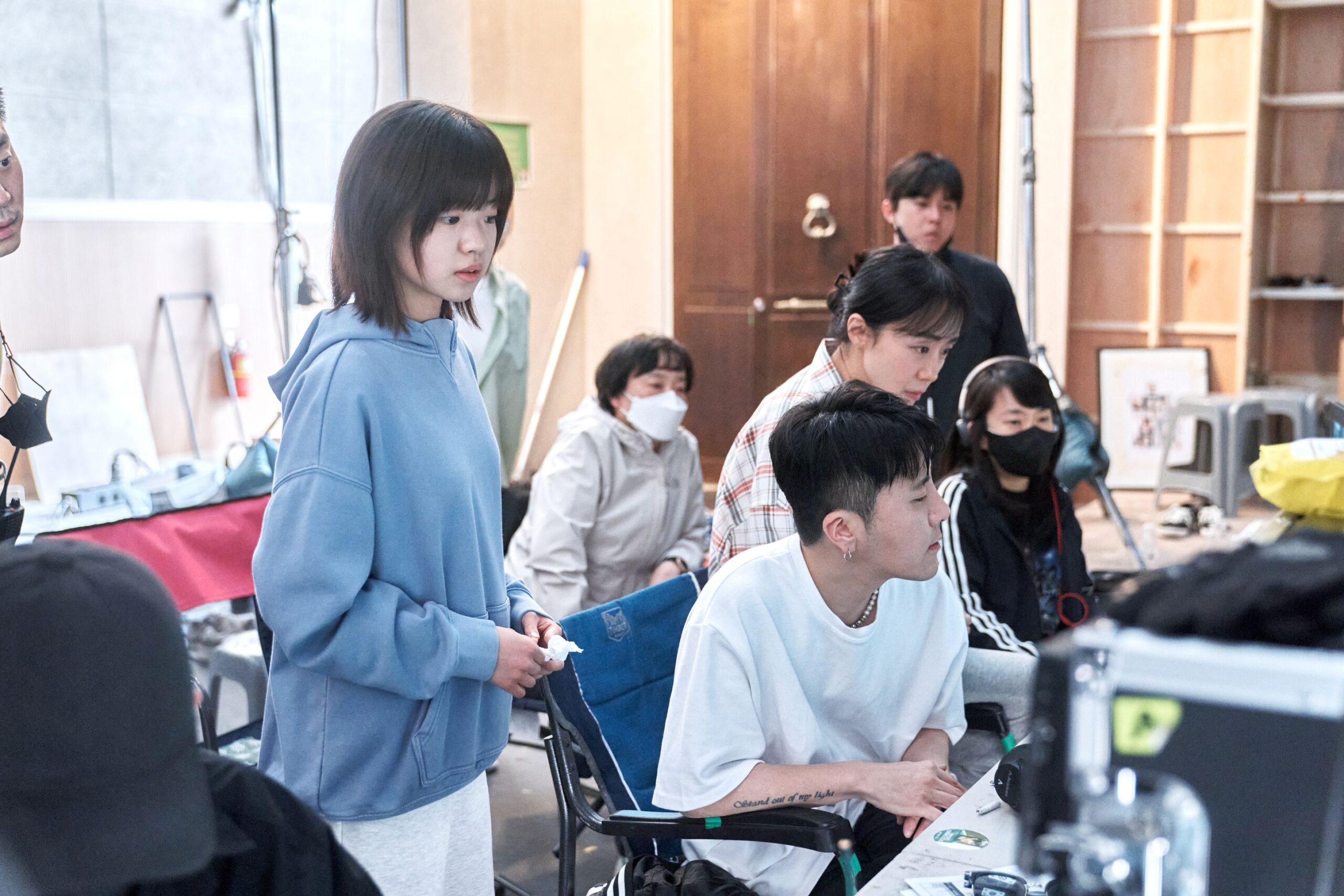
Ahn was gracious enough to speak with The Asian Cut about her feature directorial debut, how being a mother inspired the story, and using the Rocky theme.



This interview has been edited for brevity and clarity.
The Asian Cut: At the screening of the film this past Saturday, you had mentioned that your daughter was an inspiration for you making Bedford Park. I was wondering if you could elaborate on that.
Stephanie Ahn: I think that there are two main ways that my daughter influenced me into writing this story. Being a parent really opened my eyes to the parental love that sometimes doesn’t come the way that you want it to. But understanding their point of view and what that kind of love really is, and how deep it can be, was something that I certainly learned.
Having a child for me also opened my eyes to what vulnerability was. Not just because she’s a baby and she’s vulnerable, but what kind of vulnerability I was capable of. Because that parent-child dynamic is customarily a power dynamic of a parent bringing themselves into the child’s life in a way that is like a teaching figure or a caretaker.
I learned very quickly that those things are important, but when you’re actually vulnerable with your child in ways that makes them feel like it’s okay to be vulnerable, and that parents are also not perfect, it actually builds a really intimate relationship. It helped me to open my heart in ways that were unexpected.
TAC: Just to build on that, I know it took a number of years before Bedford Park was actually made. Has your relationship with your daughter and your identity of being a mother evolved over the years? Did that change the story of Bedford Park? Or was what we saw essentially the initial story that you had in mind?
SA: The initial germ of the story was mostly a family drama. I really focused on the relationship between Audrey and her parents, and how that affected her as she moved through life. There was this relationship with this character named Eli, but it was smaller in terms of scale in the original script.
I found that their relationship was actually more interesting as I was developing the script. The focus I wanted to really examine was this idea of expression of love, and how different it was in these two aspects of her life: in the Korean American home and then outside the home.
When love is primarily expressed through sacrifice, which is what she learned from her parents, there’s this contradictory idea of you having to love yourself first before you love others, which is a more Western idea. I really found that interesting, so I started focusing on that more, and that’s how that relationship between Audrey and Eli became a bigger part of the story.
TAC: In terms of the actors, I thought it was interesting that you cast two South Korean actors who primarily work in South Korea, as opposed to casting Korean American actors who primarily work in America. Was that a conscious decision in terms of the casting process?
SA: No, we looked everywhere. We certainly looked in the United States and through North America, and we put out a worldwide search, including Korea. Moon just had that thing that I was looking for ultimately.
TAC: I know that Moon spent some time in America, but given that both actors weren’t necessarily born and raised in America, did that change how you had to prep them for their roles
SA: There were definitely some challenges to that because there were cultural differences that I didn’t realize. One really interesting thing that came up was how outdated Audrey’s parents seemed in terms of them trying to set her up with this character Edward, and the instilling of “we want you to be successful, we want you to be married and have a child.”
I guess it’s sort of outdated in Korea, and what I realized was a lot of Korean American people of my parents’ generation are a little bit stuck in a mentality of when they left Korea. Whereas Korean Americans of that generation who stayed in Korea, they’ve evolved with the culture of the Korean culture, which is really interesting.
TAC: One scene that really struck me was the scene when they’re in the car listening to the Rocky theme in the background. I just wondered how that scene came about. I think it ultimately fits very well into the film, but it’s also very different from the rest of the movie. Was this something that was improvised?
SA: No, that was definitely written in the script. That scene was always about how it’s a love story, but it was never about these two people who become codependent, fall in love and they’re just obsessed with each other. It was never about that kind of love.
It was always going to be a love story about how these two people see each other clearly, and as a result, they were able to see themselves more clearly. That kind of intimacy where you can be with someone, but still have your own experience, I thought this scene could really capture that.
Having a view of these two people experience this incredible score and sharing that, but also having their individual experiences within themselves. Having that duality, I thought, could be really powerful.
TAC: I know that the film itself is still in this film festival bubble, and not necessarily out in the real world yet. But have you noticed a difference in reception premiering the film in Sundance as opposed to Toronto? With Toronto being a lot more multicultural and having a very different audience base, have you noticed a difference in reception between the two?
SA: Yes, but it’s not about whether one was better or worse. The tone is different at Sundance where I do think they focus a bit more on smaller personal films. That’s sort of been their legacy, and so I think films like [Bedford Park], people come expecting those to be showcased.
At Toronto, which is an amazing festival, it’s very impressive in terms of bringing worldwide cinema and smaller scale films like mine into the same platform. But it definitely felt like a broader audience; where they came from, what they’re expecting, and the intimacy is different for sure. But both [festivals] are very vital, and have been very warm and welcoming.
TAC: Even though the film isn’t completely autobiographical, I know you’re taking pieces of your own life for the story of Bedford Park. Are you nervous at all that it’s going to be released into the world, and that your family and everyone else is going to see it?
SA: At this point, you have to let that go. I think for me, if I’m still nervous about that, then I chose the wrong story to tell as a filmmaker. I went in knowing that my goal was for as many people to see it as possible, and I couldn’t go into that with fear. Otherwise, it would defeat its own purpose in a way. I have to be ready, proud and open for everyone to see all the ugly parts of me, and ask all the questions they want to reveal everything that comes from the film.