Ang Geck Geck Priscilla’s feature debut Ah Girl has been having an outstanding festival run lately, and now the filmmaker gets ready for the film’s North American premiere at the prestigious Toronto International Film Festival as part of the Centrepiece programme.
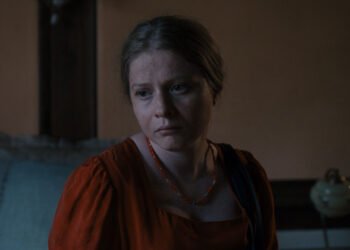
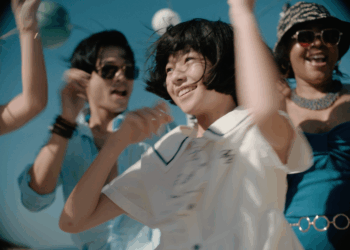
A beautiful coming-of-age story that focuses on the titular main protagonist, Ah Girl (Ong Xuan Jing), the young girl navigates her childhood, figuring out what it truly means to be an adult from a youthful perspective. She also carries a heartwarming and profound bond with her little sister, Ah Tian (Sydney Wong). Immediately, it’s easy to sense this must have been a personal story for the director.
Ahead of her big premiere at TIFF, The Asian Cut had the immense honour to sit down with Director Ang to discuss the extensive research she undertook for the film, casting her two leads, and her hopes for a trilogy.

This interview has been edited for brevity and clarity.


The Asian Cut: First of all, thank you so much for taking the time to do this interview.
Ang Geck Geck Priscilla: Oh, thank you for having me, Steven.
TAC: Ah Girl is genuinely, not only one of the best films that people will see at TIFF, but on a personal note, it’s one of the best movies I’ve seen this year, so thank you again for taking the time for this quick talk.
AGGP: Thank you! I’m very happy to hear that.
TAC: Just to start off, what does it feel like for you to have your North American premiere at a prestigious festival like TIFF?
AGGP: Wow, I felt really surprised, because Toronto is an A-list festival, and usually they only select a film with an international premiere, but my film has been screened in many festivals already. So when they told me that my film got into TIFF, I was really really happy. It means a lot for me and my film.
TAC: I read online that it took you more than a decade to write this film. Would you be able to talk about your journey going from making short films to eventually taking on your featured debut with Ah Girl?
AGGP: I don’t know where to start, but basically I spent 12 years making this film. It was a very challenging journey, because I was supposed to make this film in 2019, but then I waited for this producer to work together for two years.
When we were finally about to go into production, suddenly he told me that he faced a financial problem for his company, and he had to drop my project. It was very devastating for me. I took some time to pick myself up, and then I decided to really do deeper research so that I can make my film a bit better.
I went to talk to a few psychiatrists that mainly touch on family and children cases. While I was doing research, I went to go for counselling myself. At the end of the day, I told them the film is actually something very personal to me.
It was a very interesting journey, because I was trying to discover who I was writing this film for and why I was writing this film. After a few years, I finally found the answer. This film grew together with me. Along the way, the script actually changed quite a bit — I wanted to do something very hopeful. All my short films have a topic that is very dark.
It’s a big responsibility making a feature. I started writing short films first to work on my craft and also finding the right people when making my feature.

TAC: As you mentioned, you did studies with social workers when you were coming up with this story. What stood out to you the most while you were doing your research?
AGGP: Initially, I was struggling quite a lot. Is this film’s writing for my mother, my father or my grandmother? After I did deeper research and the people that I met telling me to go for some counselling, I realized this film is actually writing more for myself.
In the end, it’s about Ah Girl choosing herself and finding the journey that she wants. We may not be able to choose our parents, but we can always have a choice to look forward and choose what to let go. We can choose the life that we really want and learn how to let go.
TAC: That’s exactly what I really love the most about your film. It makes sure to focus on Ah Girl from start to finish, and I feel like seeing the kid’s perspective is the most crucial aspect when telling a coming-of-age narrative about childhood. What do you think is the most important component when telling a story about kids?
AGGP: You know, when I was a kid, I always felt like the adults didn’t really try to take the time to understand the kids. They always think that you can’t take them seriously because they are kids. That’s why I wrote this film from a child’s perspective, because I want the adult to really understand what the child’s going through. I want to give the kids a voice, and also empower them in a way.
TAC: Can you talk a little bit about the casting process of the two young leads and what made you decide they were the right ones to take on the roles? They were so phenomenal.
AGGP: It was a long process, to be honest. I always enjoy [working with kids], because I feel like they bring out the best in me. I think it’s always important when we’re working with kids that you need to give them the best environment. A safe place to build trust with them.
I did a shortlist of 12 to 13 kids, and I did a workshop. We play a lot of games and do a lot of activities. My intention with kids is always them having fun, but at the same time, they should be able to express themselves in the best way possible. From there, I observe and I slowly eliminate the kids that I feel are not best suited for the characters in the film. And then, down to the final two.
In the workshop, when all the kids come together, they feel more comfortable, because kids are like sponges. They learn from one another. When it’s down to the final two, they spend a lot of time with me. Another three to four months together, I help to build the range of emotions I need for my script. When they are acting, it doesn’t feel like they are acting.
When I first saw Sydney Wong as the little girl, Ah Tian, she brings a lot of smile and warmth to me. I just feel like the audience will really like her. For Ah Girl, the role is quite heavy, so I picked Ong Xuan Jing in the end. Xuan Jing is very mature for her age, which is very rare. She really cares about what other people think of her. I remember on set a lot of the crew members were saying Xuan Jing is so similar to me. Like the way she talked, she talked like me as well. I also adjusted the script a little bit to cater to their characters as well, so it’s more like a collaboration.

TAC: That leads perfectly to my next question. The reason I found some scenes to be so emotional is because I can feel the authenticity. This is how children are in real life, and I found that so deeply moving and profound. I can imagine this must have been a very personal script for you, so how much of the film was based on your childhood growing up in Singapore?
AGGP: Most of it was really based on my life story.What if my parents had made different choices? If my parents get to watch the film, maybe they will rethink the choices that they have made. There are some parts of the story — it didn’t really happen, but it was like a conversation that my parents and my grandmother had. For example, the scene where Tian was taken away, being adopted by another family, that was a conversation that my father had with my grandmother.
TAC: I also want to give props to the cinematography of the film, because it’s not only a beautifully shot film, but I feel like it adds a lot to the storytelling of it. How did you come up with the cinematic look of the film?
AGGP: I had a lot of discussions with my DP Lim Teck Siang. We worked together many times. We decided to go for the 4:3 aspect ratio, because back then in the ‘90s when we watched TV, it’s in that aspect ratio. Secondly, this is a character-driven film, so 4:3 aspect ratio works really well to bring out the emotions of the characters. I thought it was a fabulous idea to have that ratio to make the film look a bit different and more towards the ‘90s look.
TAC: Finally, aside from the amazing festival run for Ah Girl, can you tell us what’s next for you as a filmmaker?
AGGP: I’m actually working on the next feature film. It’s a psychological horror film, because I’m very into horror, since I was a kid. It has been a dream of mine to write a horror film, and I’m going to expand on my first short film that won the best Singapore short film.
I want to do a trilogy for Ah Girl as well, so there’s two more coming. It’ll be Ah Girl as a teen, and then in her 40s. Hopefully, I can use the same cast. Maybe I’m waiting for the main girl to grow up to be older.
TAC: That reminds me of Boyhood, except this time it’s an actual trilogy.
AGGP: Yeah, I hope. Kids will grow, and sometimes their interests will change, so I don’t know whether by then she will be interested in acting again.