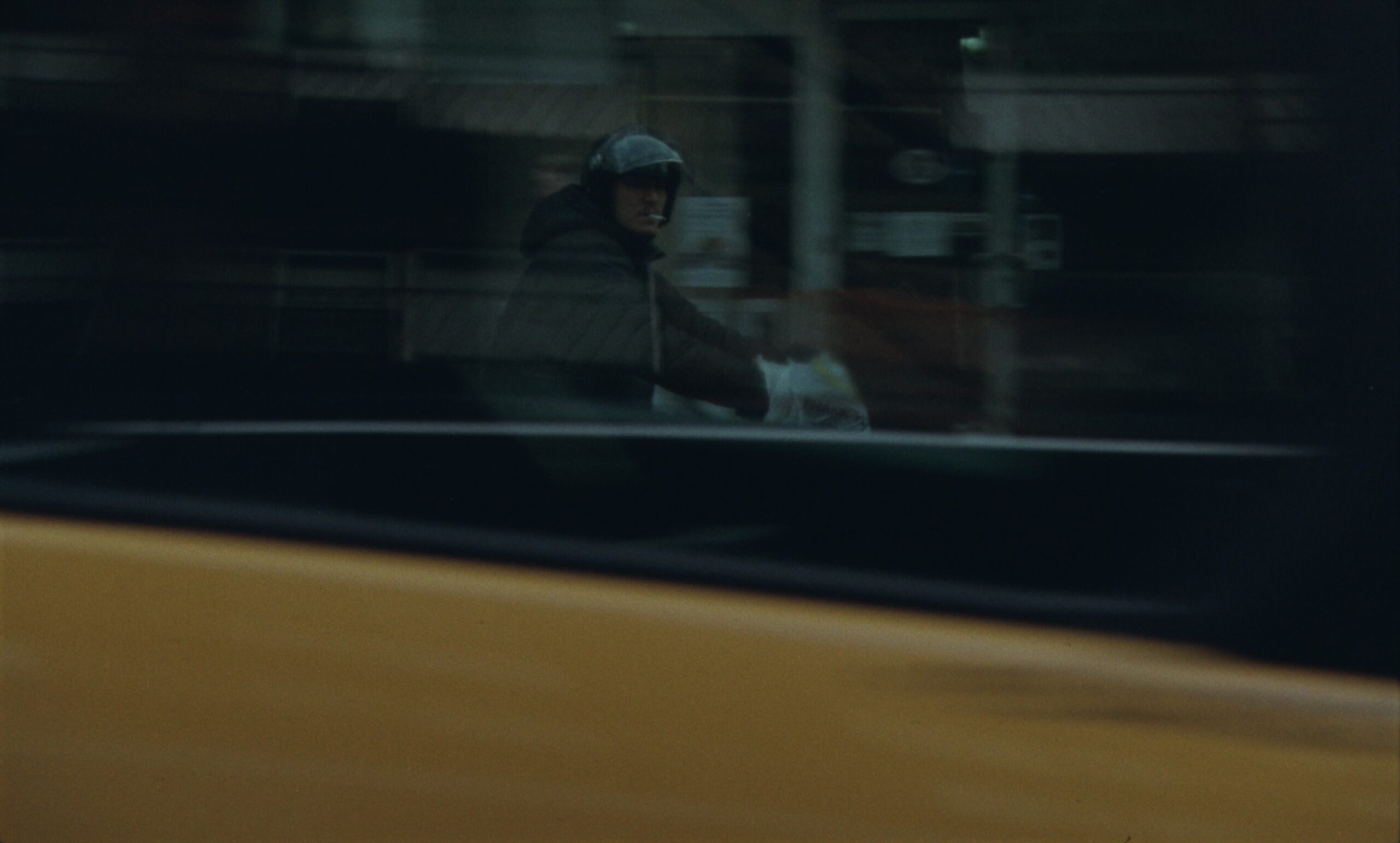
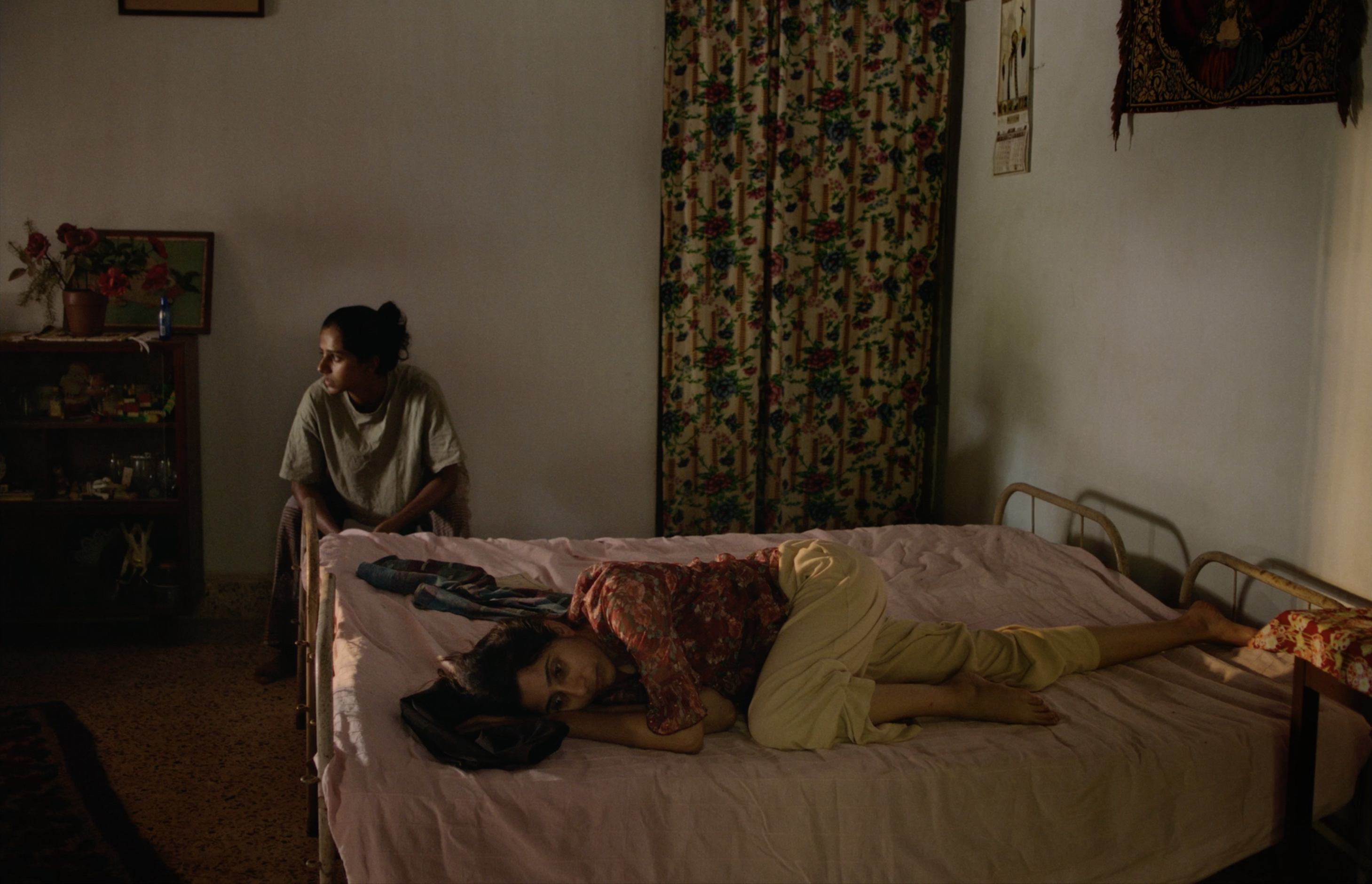
It’s been almost one year since A Sad and Beautiful World from filmmaker Cyril Aris made its world premiere at the 2025 Venice Film Festival. There, it won the People’s Choice Award (shared with Vladlena Sandu’s Memory) as part of the Giornate degli Autori program, and earned critical praise for its heartfelt tribute to Aris’ home country of Lebanon. So much so that it would later be selected as the nation’s official entry for Best International Film at the 98th Academy Awards.
Though it ultimately missed out on an Oscar nomination, Aris toured the festival circuit with his film, making stops at renowned institutions like the BFI London Film Festival, Red Sea International Film Festival, and Palm Springs International Film Festival, to name a few.
“It’s been very nice to share it with different audiences and to see how different cultures from different countries [react to] the film,” says Aris in our Zoom interview ahead of its theatrical release in Canada and the United States. “In the Arab world and in Eastern Europe, they relate so much to the theme of immigration — staying versus leaving and wanting to believe in one’s own country, even though everything around us tells us not to. While in the West, I’ve noticed they pick up a lot on the question of family and bringing children into our world today.”
Set in Beirut, A Sad and Beautiful World, which opens in select Canadian theatres today (July 24), stars Mounia Akl and Hasan Akil as Yasmina and Nino, respectively, two childhood sweethearts who reunite later in life and rekindle their romance. Though their love for each other is strong, Lebanon’s history of political and social turmoil forces them to confront the very issues Aris mentions above.
To complicate matters even more, the couple seemingly stands on opposite sides of these issues. Prior to their reunion, Yasmina’s sole goal was to earn a spot at her company’s offices in Germany, while Nino poured everything into keeping his family’s restaurant — a sort of legacy passed from his grandfather to his parents and now to him — running. Where she keeps love and attachment at arm’s length, he embraces them fully. Yasmina also sees emigration as a practical solution, while Nino views it almost like a betrayal to his country. From marriage to bearing children to even food, the list goes on.


Aris notes that, since the film’s release, Lebanon has endured “another cycle of war,” and remarks upon the “bigger war” between the U.S. and Iran and Israel. “Sometimes, I feel that screening the film right now in these circumstances gives so much more justification to Yasmina’s mindset of being like, ‘This is never going to work out. This country is never going to work out. This region is always going to be on fire. We have to get the hell out.’”
When Aris initially sat down to write A Sad and Beautiful World, he pondered his own questions of life, love, country, and children. He reveals that, at first, he “was always in full agreement with Yasmina,” but by the time he finished writing, he understood the bravery behind Nino’s beliefs. “I think it’s an active choice. No one is born optimistic. You might have a tendency to optimism, but it’s really an active choice — and it’s the more noble choice.”

This is most evident in the scenes in Nino’s restaurant. During times of peace and prosperity, the restaurant bursts with excitement. From hosting engagement parties to delivering a menu that fuses Lebanese and Italian culinary traditions, there’s endless warmth and joy inside.
“When I was working with the cinematographer [Joe Saade] and production designer [Hanady Medlej], we had the idea of the restaurant representing the stage of the country,” Aris explains. “In the first part, the restaurant is bustling with energy. Food is abundant. It’s very saturated, very colourful. There’s this chaotic energy of Beirut that is embedded in the country.”
He continues, “In the later part, when the country is crumbling down, the camera is more distant and the restaurant is much more empty. The food itself becomes non-existent or, when we see it, it’s so bland and it loses all of its colours.”
Of course, even when things become dire (in both Nino’s restaurant and Beirut at large), it’s the moments of life and celebration from the first part of the film that you can’t resist holding on to.
“We have to,” Aris says of grasping onto hope in these dark times. “Unfortunately, we have no choice. It’s our resistance, and it happens through art, through culture, through food. Food is important in our culture because celebration of any kind passes through food.”
Aris adds, “In a way, especially when our existence is very much tested by these regional conflicts and these wars, I feel that the best art comes out during these times. And if I extrapolate a bit, and I think of the Lebanese music and dance scenes, they’re thriving. It becomes so much more than a job — it becomes almost like a social duty or a historical duty to reassert our presence and our culture and celebrate it through any kind of artistic endeavour.”