Movies like Yoyogi Johnny are always a tough sell. Either you fall into their deadpan rhythm, where jokes land like someone quietly pushing a chair across an empty classroom, or you spend the whole film wondering whether you missed the punchline three scenes ago. Satoshi Kimura’s coming-of-age comedy is slow, strange, talky, and sometimes so determined to play against obvious pleasure that it practically dares you to walk away. And yet, for all its poking and prodding, there’s a tenderness to its awkwardness that makes it hard to dismiss.
Johnny Yoyogi, played by KANON (from the boy band STARGLOW) in his film debut, is the kind of teenager who can turn a breakup into a philosophical hostage situation. In the opening scene, he tries to explain to his strong-willed girlfriend Atsuko (Mio Matsuda) that liking her may be similar to liking history as a subject: a default answer, not a conviction. It’s a ridiculous argument, but also a weirdly precise one. Johnny doesn’t seem cruel so much as emotionally underdeveloped, the sort of boy who can intellectualize a feeling until the feeling gets bored and leaves the room.
The joke is that everyone around him is only slightly better adjusted. Johnny spends his afternoons in the school squash club, which is really more of a squash-club-room club, since most of its members don’t actually play squash. They’re there because the room gives them somewhere to hide. One wanted to start a fire club, another wanted a club devoted to badmouthing people, and somehow all of these abandoned ideas have settled into one little ecosystem of teenage avoidance. Then, a new student who they call Deko (“forehead”) arrives and insists that they actually learn squash, which is funny precisely because everyone treats physical activity as an unreasonable violation of the club’s spirit.


Kimura gets a lot of mileage from these conversational pileups. His humour depends on over-explanation, social misfires, and arguments that grow more ridiculous the more carefully everyone tries to clarify them. That will be maddening for some viewers, and honestly, I get it. At 109 minutes, the film can feel stretched, and its plain visual style doesn’t always rescue the slower patches. The cheeky title cards promise something wilder than what Kimura delivers; instead, the movie settles into a softer, more repetitive eccentricity.
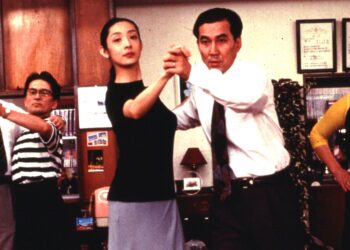
But the film’s best scenes understand something tender about social anxiety: ordinary life often has to be rehearsed before it can be lived. Johnny’s childhood friend Kagura, a recluse, asks him to practise tiny acts of contact and public behaviour, from choosing jelly to navigating a camera shop. Izumo (Maya Imamori), a country girl working at a used bookstore, carries her own nervousness around touch and closeness. Around them, Johnny becomes less a romantic hero than an accidental practice partner for people trying to rejoin the world.
That’s also why the film’s frustrations don’t completely sink it. Johnny leaves the squash tournament to see Izumo off, and the expected confession never quite arrives. In a more conventional teen romance, that might feel like the movie chickening out. Here, it feels closer to the truth of the character. Johnny isn’t ready for the grand gesture, and Yoyogi Johnny is more interested in the strange little rituals that come before it: asking to be touched, learning how to buy a gift, deciding whether friendship needs to be said out loud. The movie may not fully solve its own awkwardness, but it understands that adolescence is often just a long rehearsal for living. On some days, you play squash. On other days, you merely sit in the clubroom and call that progress.