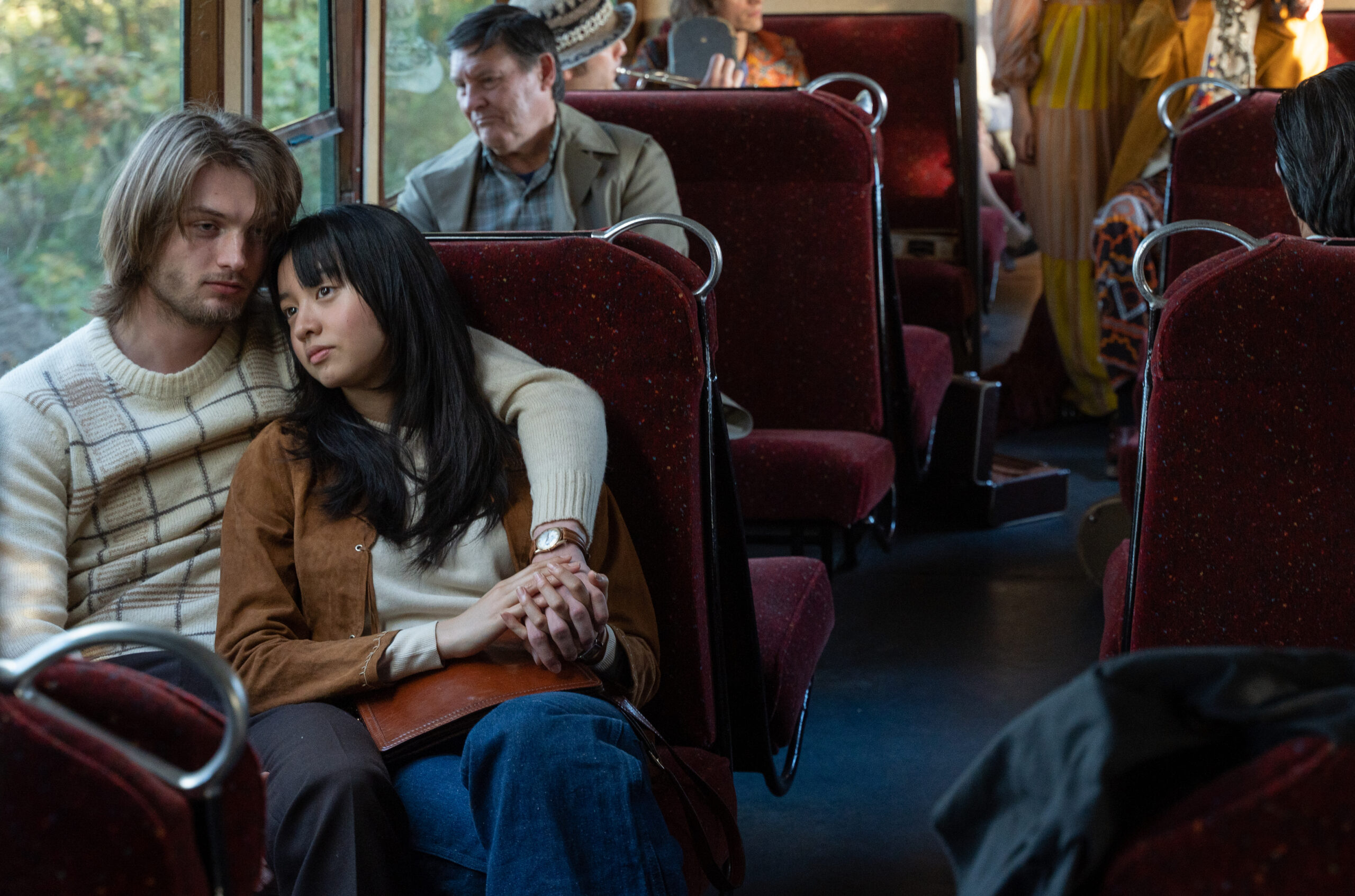
A tidy three-hander directed by Bryn Chainey, Rabbit Trap stars Dev Patel and Rosy McEwen as Darcy and Daphne Davenport, a married couple living in an isolated cottage in 1970s Wales. Darcy spends his days recording sounds in nature, bringing them to his artistic wife Daphne to inspire her musical experimentation. When Darcy’s equipment picks up an unusual and eerie sound deep in the woods, a strange presence begins to make itself known to the Davenports. An unnamed child (Jade Croot) makes a sudden appearance and quickly inserts himself in their cosy lives, all the while secretly driving a wedge between the couple. The film delivers a small but effective folk horror tale anchored by Croot’s disquieting performance.
Gorgeous Welsh landscapes bless the film’s cinematography. Picturesque fields of stone and grass, verdant old-growth forests, dark tunnels and hideaways — everything naturally evokes the presence of the Fair Folk. It’s wonderful to see Patel inhabit this very British mythical space again as he did so effectively in David Lowery’s retelling of The Green Knight. Haunted by an unspoken horror that pre-dates the events of the film, Patel conveys Darcy’s fear effectively without saying much.
Croot (who is actually a 20-something young woman playing an androgynous child in Rabbit Trap) proves key to the whole film. She merges the adorableness of early-Harry Potter Daniel Radcliffe and the discomfiting aura of The Killing of a Sacred Deer’s Barry Keoghan to craft an increasingly malevolent presence. She effectively walks the line between innocent child and manipulative supernatural being with her youthful peals of laughter and wide-eyed gazes. With her performance, the film can effectively portray the very British horror story of being too polite to rid oneself of an unwelcome guest that threatens to bring about the Davenports’ (and particularly Daphne’s) demise.

The standout element of Rabbit Trap is, of course, its sound design — at times beautiful, intriguing, and freaky. Starting with one of most breathtaking natural phenomena, a murmuration of starlings, and later picking up sounds as small as gently pressed damp moss, the movie provides a veritable and subtle sonic feast for the ears. Words, too, hold extra meaning as characters whisper and intone meaning-laden dialogue. Vibrations eventually become distorted and estranged by the manipulation of mechanical equipment or the filter of the invisible folkloric horror that creeps into the story. Chainey also effectively uses silence, as the noise that has permeated the film falls away to allow the characters to reveal the hidden parts of themselves.
However, Rabbit Trap falls short at times by elliding a bit too much of the story. With a too-gentle tone, it doesn’t quite achieve truly terrifying horror. In the end, it’s their relationship that forms the real fear Darcy and Daphne must face. Both hide a part of themselves from the other, which causes an invisible rift, yet doesn’t seem to really jeopardize their marriage at any point.
The supernatural takeover — if it can be called that — doesn’t strike fear, but rather whimsy, causing the final act of the film to lose a bit of steam. Yet the final scene manages to win back a bit of goodwill with convincing warmth.
Rabbit Trap doesn’t exactly snap to break bones, but it does its best to make a long-lasting impression.