In August 2014, Shalin Shah was training for the Peace Corps in Peru when he was rushed to the hospital for an incessant cough, difficult breathing, and unbearable pain in his rib. Hours later, a CT scan revealed a six-inch mass in his chest cavity. Upon being medically evacuated back home to California, doctors diagnosed him with stage IV synovial sarcoma, a rare and aggressive form of soft-tissue cancer. His prognosis was terminal, and he was only 21 years old.
The following year in May, shortly after his passing, Shalin’s loved ones submitted an essay to HuffPost (then, The Huffington Post) on his behalf — which he had written just days after his initial terminal prognosis — called “Thank You Cancer.” The article went viral on social media, with many feeling touched by Shalin’s positive outlook on, in his words, the “beautiful gift of life” despite, or perhaps because of, his circumstances. Netizens created the hashtag “SunsetsForShah” soon after, inspiring millions of people around the world to share images of sunsets in homage to one of Shalin’s favourite everyday joys.
“What Shalin wrote, his message, what he left in life, and how he lived his life was just so inspiring to me,” filmmaker Mahesh Pailoor tells The Asian Cut in a Zoom interview. “Part of my interest in making the movie was to be part of telling Shalin’s story and passing it on to other people.”
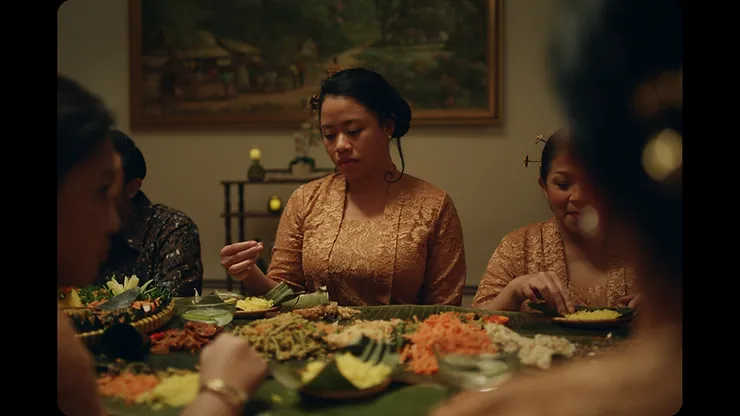
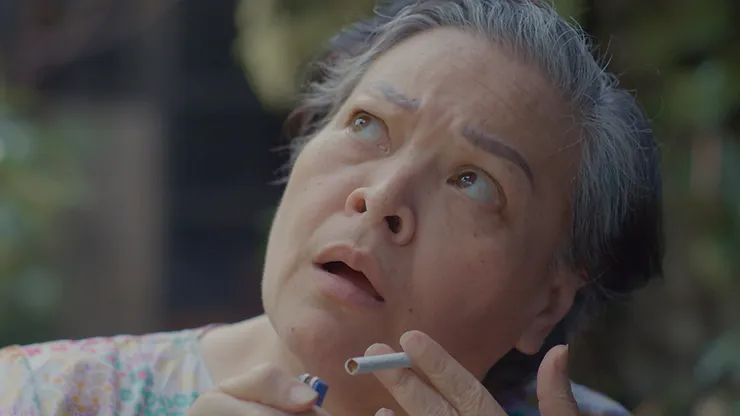
We meet ahead of the theatrical release of his newest drama, Paper Flowers, which adapts the final year of Shalin’s (Kapil Talwalkar) life: from college graduation to cancer diagnosis to getting married to his high school sweetheart to final goodbyes. The script reached Pailoor’s desk via one of the film’s producers, Asit Vyas (one of Shalin’s uncles). Indeed, the global response to Shalin’s HuffPost essay inspired his family and friends to try and preserve his legacy. One avenue was the establishment of The Shalin Happiness Foundation, a non-profit organization that helps people find joy in everyday life. However, for Vyas in particular, making a movie was the grander idea.
“It was almost like a passing of the torch,” Pailoor says of the viral essay, social media movement that followed, and foundation built in his honour. “It was like Shalin had wanted to leave a legacy of this message, and Asit was like, ‘We can make a movie and share the story larger.’ He was the one that started it, and then I came on board.”


Considering how important Shalin is to his family — many of whom were involved in making Paper Flowers, in addition to his uncle — Pailoor understood immediately the responsibility of carrying on Shalin’s legacy. At the same time, he says, “As a filmmaker and as a director, what I can do is be the most responsible to the story — and sometimes that might be different from the real people.”
He continues, “I think what we did stayed true to what happened, but we did take some creative liberties. That’s partly the beauty of the filmmaking process, too. Once you start bringing people in — not just myself, but the actors; they bring their own life experiences — all of a sudden, these characters that are based on real people become vessels for all of us to tell that story.”

Interestingly, it wasn’t fidelity to real-life events that proved to be the trickiest part of adapting Shalin’s story, but rather making the emotional beats throughout feel earned and not, as he puts it, “manipulative.” To achieve this, it starts with the casting process, and in this regard, Pailoor is “grateful for the cast that we have because if you don’t earn it, it falls off the cliff really quickly.”
Joining Talwalkar as Shalin are Olivia Liang, Meera Simhan, and Faran Tahir playing Fiona Chang (Shalin’s girlfriend) and Shalin’s mother and father, respectively. Though Shalin and Fiona’s love story form the beating heart of Paper Flowers, it’s the parents’ emotional journey that lend it extra depth. So much so that, early on in production, it was a scene between Simhan and Tahir, in which their characters first come to terms with their son’s terminal prognosis, that gave Pailoor the assurance that they were on the right track.
“Watching the two of them together, I knew that we could continue to make a movie that was in that mold. That I could lean on the actors and I could trust that they were going to be able to earn the emotions of it. It really comes down to them.”
Rounding out the core cast is Karan Soni, an intentional casting according to Pailoor to bring humour and levity to the story. “It’s a hard movie sometimes, when you think about the drama or the tragedy,” he explains. “As much as there is that, we wanted to make a hopeful and inspiring and uplifting story. Part of what Karan brought to the table was inflecting some human comedy. It kind of helps process the emotions in a different way.”
When asked about the Shah family’s reaction to seeing Paper Flowers for the first time, Pailoor recalls the film’s “amazing” premiere at the 2024 Dances With Films Festival in Los Angeles: “It was at the TLC Chinese Theater, opening night of the festival, and it was a packed house of 1,000 people or so. It was really incredible because the family was there — parents, but also a lot of friends and relatives.”
He adds, “When I was talking to family members and friends at the end, it felt like they all had an experience of being able to watch this movie and see Shalin’s message continue on.”