On the surface, In Broad Daylight paints itself as Hong Kong’s answer to Spotlight. A film that traverses the all too familiar narrative planes of journalism as a saviour of social injustice, while affirming the importance of truth and moral integrity. A deeper reading, however, colours the film as a story nested within Hong Kong’s faltering status as an autonomous society. The film is commercially sound, but also has layers of nuance that likely represents the region’s collective subconscious, in a manner that befits how much actual freedom political expression is afforded these days. A strong effort from a (relatively) new director Lawrence Kan.
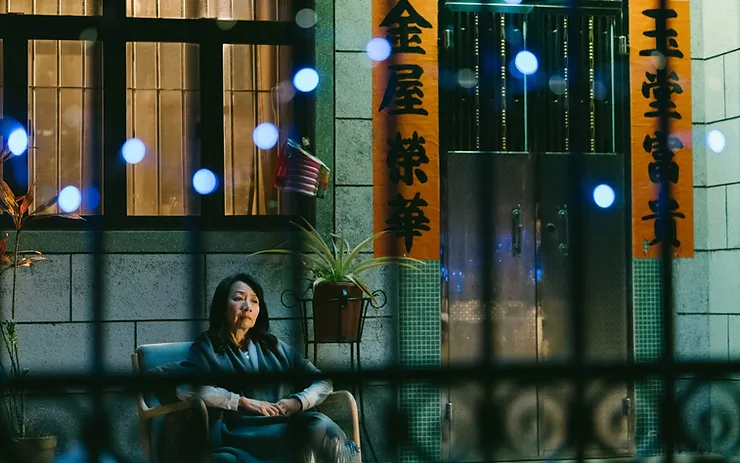
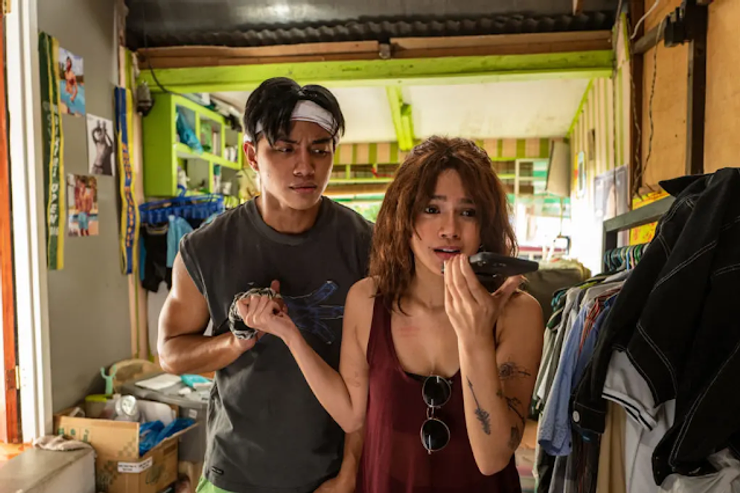
Inspired by real events, Kay (Jennifer Yu) is a veteran journalist known for her undercover work. As part of her next story, she embeds herself into a nursing home, revealing some abusive practices by the home’s administration. Posing as the granddaughter of a local resident (David Chiang), she ends up implicating the home’s director (Bowie Lam) in a public legal battle. The film also features a thunderous performance by Rachel Leung (who also won a Hong Kong Film Award for her performance) as a resident with special needs, as well as memorable supporting roles for Nina Paw and Wu Fung.
Yu’s performance as an overdetermined workaholic journalist contains assured confidence — her Best Actress win at the Hong Kong Film Awards earlier this year proving to be rightfully deserved. Likewise, Chiang’s win for Best Supporting Actor — surprisingly his first win from the Hong Kong Film Awards Association — is particularly memorable given that aging legends are rarely afforded roles like this in contemporary Hong Kong cinema. Although Patrick Tse did manage to pick up a Best Actor award recently for his work in Time, there remains countless others who will hopefully have the opportunity to contend in the near future. One might argue that Wu Fung also falls into this category, and had his role been a bit more significant in the film, he likely would have been in the awards conversations, too. Similar to his much older contemporaries, Bowie Lam has also long been a staple of TVB, but can certainly flourish when given the right role. He fully delivers in In Broad Daylight as a quietly vile custodian of the vulnerable, and is truly sinister in his performance.


Tackling issues around social inequalities, the film is in the vein of Ann Hui, albeit with more commercial sensitivities. At times, In Broad Daylight plays like a politicized thriller, and Wan Pin Chu’s foreboding score sets the tone ever so perfectly. Kan doesn’t shy away from depicting some truly awful events, but never lingers or sensationalizes to the point of exploitation. In many ways, Kan has crafted something that’s accessible enough to capture a broad audience, while still exposing the narrative’s more traumatic elements.
In Broad Daylight doesn’t go so far as to say that journalism and systemic truth don’t matter at all, but in Hong Kong’s current political climate, would such a claim even be advisable? Maybe this viewpoint over-politicizes the narrative intentions of Kan’s screenplay (co-written with Cheuk-Fung Li and Tong Chui Ping), and the film’s reflection of real-life events. Yet, every time Kay seems to lose faith in her work as a journalist — and by extension, the governing power’s judicial system — the story leans on nostalgic views to support her motives and values. Even though the film seemingly concludes on a somewhat content, albeit sombre ending, the uncertain future it paints for both its characters and journalistic efforts in general, feels intentionally ambiguous.
This pivot towards both the futility and value of speaking one’s truth through a nostalgic lens is perhaps an allegory to where things stand for journalists in Hong Kong today — post implementation of the National Security Law. Although the story itself doesn’t necessarily tackle an issue that would fall into the purview of what the legislature tends to target, the sentiment of where journalism (and freedom of expression) stands is all the same. By extension, the film also highlights the limitations of what artists are able to convey.
Kan should be lauded for accurately conveying the power, as opposed to the theatrics, of journalism. In Broad Daylight is a towering film that starts off small, but ends on some heavy imagery. It’s hard to pinpoint whether the film’s worldview is meant to be bleak or hold some degree of promise, but at all turns, it never undersells the value of affecting change through the greater truth. This value isn’t always qualified with practical outcomes, which also applies to artistic expression in general. Sometimes, a product’s value simply comes from its general sentiment and messaging.
Filmmakers in Hong Kong, for better or worse, are bound to this limitation, and the thesis of In Broad Daylight emphasizes the tenuous margin that artists must work within. Alas, Kan works efficiently within those margins, crafting an entertaining film with a grander subtext that elevates the narrative to higher heights.