“Hello! Are you Filipino?” was the first thing Carl Joseph Papa asked me, as I fumbled through my audiovisual setup. Exuding an affable demeanour, I’d like to think that it’s his little way of breaking the ice, even offering that we could speak Taglish or even pure Tagalog throughout our conversation to keep it loose and light.
For somebody none the wiser, they wouldn’t expect the same man to have written and directed a heartbreaking and cathartic film about trauma and reclamation of one’s voice and identity.
Papa’s The Missing, the Philippines’ official submission for the Best International Feature Film at the 96th Academy Awards, has been garnering acclaim both in the Philippines and across the globe. I had the chance to catch up with Papa through a Zoom interview before a screening of The Missing in Los Angeles, California.
And, in keeping with his aim to keep things loose, I ask him point-blank: With millions of artists to choose from, why make your protagonist a big fan of Nickelback?
Papa chuckles heartily, acquiescing to the hatred the band has gotten over the years. He then explains that in his younger years, he was part of a band whose repertoire included playing covers of alternative rock acts such as Nickelback.


“Plus, I really like them.”
As The Missing continues to receive critical praise for its storytelling, performance and medium, I told Papa that people from all over the world are starting to take a closer look into Philippine cinema. Pressed to name a few great Filipino films as others’ jumping-off point, the director names the psychological horror Kisapmata by Mike de Leon, drama film Pisay by Auraeus Solito and coming-of-age movie Senior Year by Jerrold Tarog as his three personal favourites.
Thinking back on our conversation, it now makes sense that the man who greeted me amiably also wrote and directed The Missing.

This interview has been edited for brevity and clarity. Mild spoilers ahead.
TAC: In an interview you once said that you were inspired by Richard Linklater’s Waking Life, which also used rotoscope animation. How did that influence manifest in your directorial choices in this film?
Carl Joseph Papa: I’ve always looked at rotoscope animation as an artform that challenges you to see things and perceive whether each element is real or not. I wanted to bring that sense of confusion to the film in terms of style, considering that my protagonist Eric does the same profession. In a way, the film’s style complements Eric’s thought process, since he’s begun questioning his own reality.
Speaking of rotoscoping, it can be a very demanding technique. What considerations did you keep in mind when working with the animators in order to ensure a seamless blend between live-action and animation?
Planning was crucial both in pre- and post-production. Before we even began, the animators and I had a bible that detailed the specifics of the resulting animation—from the details of each element to the brushstrokes. However, I didn’t constrain them to a specific software. Instead, I had them use the software they prefer, and only after which did I set guidelines per software.
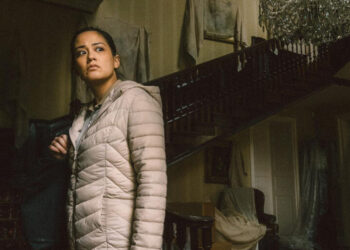
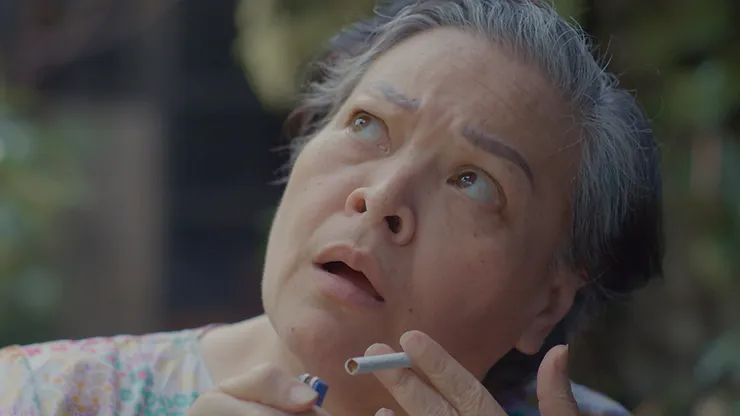
It goes without saying, but the cast is perfect, from Gio Gahol and Dolly de Leon to Carlo Aquino. Can you share the collaborative and creative processes among you in order to bring a deeply personal story to life, particularly in this medium?
When we started working on the film, we still had to rely largely [on] videoconferencing due to COVID-19. Gio proactively discussed the film and his role with me—as did Dolly—which I enjoyed. Both of them took a particular interest in knowing the backstories of their characters, both beyond what was written in the script and what I provided them to serve the overall story.
Carlo, on the other hand, took a different approach, internalising instead to get into Eric’s motivation, struggle and reclamation. It was that serious, so much that his first day on set, I was genuinely scared of him. He was too quiet, to the point that I began asking myself if he wasn’t a fan of what we were about to do. [laughs] As it turned out, Carlo was actually nervous to play the character, placing the responsibility squarely on himself to nail the part and represent victims of abuse the right way.
On set, I benefited from having an assistant director, Alwyn Uytingco, who is also an actor. So if there were directions I had in mind that I struggled to communicate, it was Alwyn who would relay them to the actors.
While the film explores trauma and grief, I greatly appreciated its emphasis on the importance of having a support system. What was the significance of portraying a healthy support system in the face of such challenges?
When I wrote the film, that element was non-negotiable. For me, if we want to encourage people to speak up—which serves as one of The Missing’s main goals—it is imperative that we make them feel that they are not forced to speak up. Instead, as their lifelines, we let them speak, and it’s our job to just listen.
The film showed how Eric ultimately reclaimed his voice despite what happened, and the presence of the supporting characters highlighted that importance. Usually, these kinds of films go really dark, and don’t offer practical solutions afterwards. As a result, after watching the film about trauma or sexual abuse, you end up feeling more morose.
I don’t want to take that route, because I know that there would be viewers of this film who either might have undergone, or are undergoing the same ordeal. I don’t want them to get hurt.
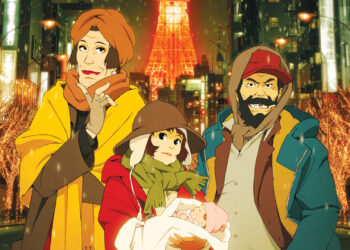
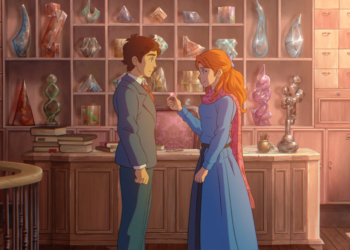
Your film delves into adult animated storytelling in the Philippines. What potential do you see for the future of this genre in the country, and how do you hope The Missing contributes to the broader landscape of Philippine cinema?
[Pauses] I think, “contribution” in the sense that other Filipino filmmakers would be encouraged to tell more adult stories and use animation as a medium for their storytelling. I hope that they overcome their hesitation to consider adult animation just because of the lack of viewership and the small market for such a genre.
Another thing is to break the stigma with animation in the country. People have been dismissive of it, associating the medium with children’s storytelling. In reality, it’s a visual medium where you can tell any story as you see fit. With The Missing, I hope this inspires other filmmakers to see the potential of this art form, realising the countless stories more that they can tell through animation.