• About
  • Contact
  • Write For Us
No Result
View All Result
Donate
The Asian Cut
  • Home
  • News
  • Reviews
  • Interviews
  • Essays
  • Director Retrospectives
  • Home
  • News
  • Reviews
  • Interviews
  • Essays
  • Director Retrospectives
No Result
View All Result
The Asian Cut
No Result
View All Result

Reel Asian 2024: ‘Nikah’ Portrays Uyghur Communal Life in the Shadow of Persecution

Paul Enicola by Paul Enicola
November 20, 2024
in Review
0
Guzalnur Uchqun in Nikah staring out a window on a rainy day holding a mobile phone.

Photo Courtesy of Icarus Films from The Generate Films Collection / Toronto Reel Asian International Film Festival

⭐⭐⭐⭐

Rating: 3.5 out of 5.

Mukaddas Mijit and Bastien Ehouzan’s Nikah quietly commands attention with its portrait of a culture under siege. Set in the autonomous Xinjiang region of China in 2017, the film unfolds with an intimacy that feels almost documentary-like, immersing the audience in a Uyghur world that’s both rich in tradition and stifled by looming repression. At just 55 minutes, this tightly constructed story strikes a delicate balance between personal drama and the socio-political tensions facing this minority population.

Nikah’s opening scene, a video call between two friends, sets a tone of seeming ordinariness. Dilber (Guzalnur Uchkun), a 27-year-old single woman, chats with her friend as the camera glides through the streets, catching a painted slogan on a wall: “Let’s work together to unite all ethnic groups.” It’s a fleeting moment, but one that hints at the suffocating control imposed on the Uyghur people.

The story builds around Dilber’s predicament: as her younger sister Rena (Dilfuze Yakup) marries, the pressure on her to find a husband intensifies. Family and societal expectations converge, casting unmarried women as unlucky or socially unfit. During one scene, her mother urges her to leverage the wedding’s festivities to meet a potential suitor. Yet Dilber’s quiet defiance—the internal struggle of wanting to follow her desires without completely rejecting tradition—grounds Nikah in realism.


RelatedStories

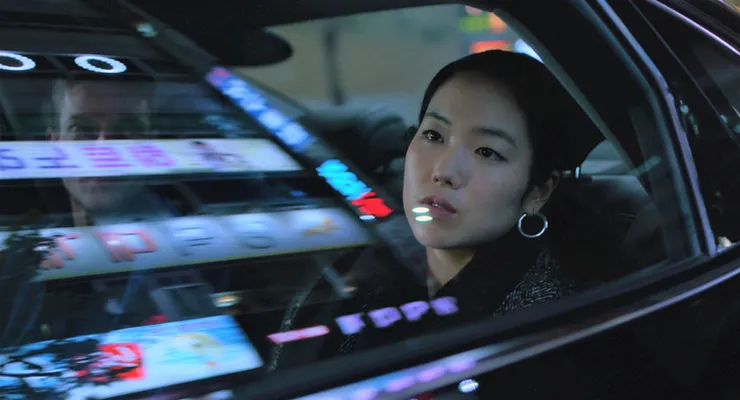
Yamato Kochi as The Walking Man in Exit 8

A Subway Corridor Turns Into a Moral Trap in ‘Exit 8’

Sopheanith Thong and Deka Nine as Nisay and Thida in Whisperings of the Moon, having an intimate conversation at an amusement park.

Inside Out 2026 Review: ‘Whisperings of the Moon’ Forever Memorialises Its Late Director

Few movies, if ever, depict Uyghur life with as much immediacy as Nikah. From music and communal celebrations to cuisine and contemporary dance sequences, the film vividly renders a culture that is both alive and vulnerable. In addition, Mijit and Ehouzan’s decision to cast non-professional actors deepens the film’s authenticity, as moments feel less performed and more lived.

That realism, however, contrasts with the encroachment of state surveillance, most memorably depicted when joyful celebrations are viewed through facial-recognition cameras. The film’s understated but cutting critique of Chinese counterterrorism measures reveals how these observances, rich in faith and history, are redefined as threats and acts of extremism that require ‘re-education.’

As a portrait of life lived under quiet duress, Nikah leaves an indelible impression. As a piece of political critique, though, it lacks depth, simply ending the film with title cards to provide additional context.

Its refusal to dramatise or fully develop certain threads is a double-edged sword. While it could be seen as a missed opportunity to heighten the emotional stakes, I appreciate the filmmakers’ choice to sidestep heavy-handedness, allowing for a subtler and more unsettling evocation of a world teetering on the edge of erasure.

The 28th edition of the Toronto Reel Asian International Film Festival runs in-person and online November 13-24. For tickets, scheduling, and other details about this year’s programming, visit the festival’s website.

Now Streaming On

JustWatch

The Review

Tags: Bastien EhouzanDilfuze YakupDramaFranceGulchehre QadirGuzalnur UchqunMukaddas MijitReel AsianReel Asian 2024Uyghur
ShareTweet
Paul Enicola

Paul Enicola

Paul Enicola is a self-described cinephile who couldn’t stop talking—and writing—about films. Inspired by the biting sarcasm of Kael and the levelheaded worldview of Ebert, his love for film began watching Asian films directed by Lino Brocka, Satyajit Ray, and Wong Kar-wai. He's currently based in the Philippines, where he serves as a member of the Society of Filipino Film Reviewers.

Recommended For You

Brigitte Lin as Tsao Wan, Cherie Chung as Sheung Hung and Sally Yeh as Bai Niu stare at each other with urgency in Peking Opera Blues.
Essay

‘Peking Opera Blues’: An Ode to the Two Tones of Hong Kong

June 7, 2024
Riz Ahmed as Hamlet in Hamlet
Review

TIFF 2025: ‘Hamlet’ Locks onto Riz Ahmed’s Performance and Doesn’t Let Go

Photo still from Leela
Review

Reel Asian 2024: ‘Leela’ Captures the Sinister Threads of Womanhood in Small Towns

Juliette Binoche as Eugénie seated at the dinner table and Benoît Magimel as Dodin Bouffant standing next to her holding her hand in the movie The Taste of Things.
Review

Trần Anh Hùng’s ‘The Taste of Things’ Swoons and Seduces with French Food and Romance

Sidonie in Japan
Review

Venice Film Festival 2023: ‘Sidonie in Japan’ Brings Levity To Grief

Ryohei Suzuki as Kosuke Saito playful styles the hair of Hio Miyazawa as Ryuta in Egoist.
Review

TJFF 2024: ‘Egoist’ Trades a More Powerful Story for Self-Serving Sentiment

Next Post
A medium close-up of Liu Hsiu-Fu as Zijie in Pierce, dressed in a white fencing uniform.

Reel Asian 2024: ‘Pierce’ Is a Sharp Thriller That Strikes the Mind and Heart

Popular Stories

Jimmy O. Yang as Willis Wu and Ronny Chieng as Fatty Choi holding plates and tea pots in the television series Interior Chinatown.

Hulu’s ‘Interior Chinatown’ Sends Up the Police Procedural

Zhu Yilong as Ma Zhe holding a flashlight investigating a scene in the Only the River Flows.

‘Only the River Flows’ Blends Existentialist Philosophy and Serial Killer Procedural

“What kind of people are we?”: A Conversation with ‘Materialists’ Director Celine Song

“What kind of people are we?”: A Conversation with ‘Materialists’ Director Celine Song

1 year ago
Director Park Chan-wook standing in front of a window

Park Chan-wook on ‘Decision to Leave’ & Learning From ‘Oldboy’

4 years ago
Tôko Miura as Misaki Watari in Ryusuke Hamaguchi's "Drive My Car."

The Soft Power of Quiet Films: How Silence Speaks in Asian Storytelling

12 months ago
  • About
  • Contact
  • Write For Us

Copyright © The Asian Cut 2026. All rights reserved.
Privacy Policy | Terms of Use

Welcome Back!

Login to your account below

Forgotten Password?

Retrieve your password

Please enter your username or email address to reset your password.

Log In
No Result
View All Result
  • Home
  • About
  • News
  • Reviews
  • Interviews
  • Essays
  • Director Retrospectives
  • Write For Us
  • Contact

Copyright © The Asian Cut 2026. All rights reserved.
Privacy Policy | Terms of Use