With the conclusion of last night’s 98th Academy Awards ceremony, we officially close the book on the 2025 film calendar — and it’s fair to say, Asian and Asian diasporic cinema had a year.
In the world of animation, Maggie Kang’s Academy Award winning K-Pop Demon Hunters created an international pop culture phenomenon, and Liane-Cho Han and Maïlys Vallade’s Little Amélie or the Character of Rain offered a tender-hearted portrait of childhood curiosity. It Was Just an Accident and The Voice of Hind Rajab furthered the year’s cinematic theme of resistance, while Oscar perennial Chloé Zhao brought audiences to tears with Hamnet. Additionally, documentarian Geeta Gandbhir earned two nominations this year for her feature length film The Perfect Neighbor and a documentary short, The Devil Is Busy, cementing Gandbhir as a voice demanding to be heard in the non-narrative space.
While the Academy had their say last night, at The Asian Cut we give some love to other titles that moved us (including an “about time!” first-watch from one of our writers), as well as some justice for a Korean film the Academy undeservedly snubbed. Here are our favourite films (and first watches) from 2025.
The Colors Within
Dir. Naoko Yamada
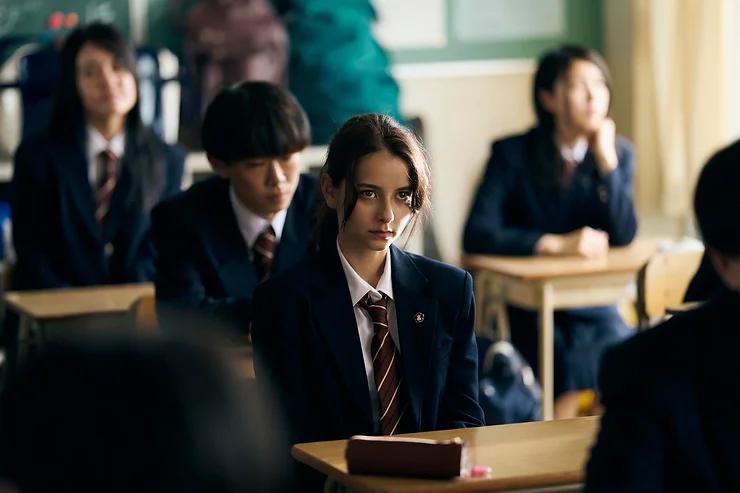
Seeing the world through a child’s eyes can be calming and alarming in equal measures. Their innocent perspective forces us to reassess our priorities and long for easier days when 1+1 simply equalled two. Naoko Yamada’s The Colors Within evokes this purity through young Totsuko (voiced by Sayu Suzukawa), a high school student who has a form of synaesthesia where she perceives people as colours, each person’s energy conjuring a different hue.
The Colors Within marks Yamada’s first time directing an original story and her unique artistry can be found throughout. The delicate way in which she allows Totsuko to grow and discover the world, produces an indelible mark on audiences. By incorporating visual, narrative and sonic storytelling elements, Yamada brings to life the nuances of growing up and captures the challenges felt, in spite of our nostalgic retrospective read of this season of life.
—Rachel Ho

Happyend
Dir. Neo Sora
I watched Happyend with zero expectations and was pleasantly surprised and charmed by its ambition and intensity. Neo Sora’s film pulls a heady shot of emotions out of the final year of high school with an underlying ripple of techno-dystopia. Best friends Yuta (Hayato Kurihara) and Kou (Yukito Hidaka) lead a teen band of mischief-makers and music lovers who face the end of their childhood in a not-so-distant future version of Tokyo.
As the kids reluctantly grow up and grow apart, they reckon with their relationships with each other and to the world at large, from parents and teachers to police and government. Critical glints of what’s happening in wider Japanese society, including the rise of fascism, ongoing racism against Korean and other non-Japanese persons, and the oppressive threat of natural disasters, make this film deeper and more fascinating than a simple coming-of-age story. But the lasting impression is a balance of potent nostalgia and the thrill of future possibility.
— Rose Ho
In the Mood for Love
Dir. Wong Kar-wai
I could write a whole dissertation on Tony Leung’s eyes, which I witnessed for the first time last year when I saw In The Mood for Love. I know, I know – but I’m glad I waited, because I got to see it on the big screen, which also amplified details like Maggie Cheung’s elegant gait, as she slinks up and down narrow staircases. Wong Kar-Wai’s fixation on particular objects – especially clocks, rice cookers, and curtains – symbolise the same tamed passion of Leung’s eyes and Cheung’s gait, chaos controlled in the most ordinary, hidden ways.
These characters have such deep love and respect for each other that to unleash passion runs the risk of cheapening what they have, for it sits too close to revenge. (Both their partners are betraying them.) But this commitment to respect and responsibility comes at a steep personal cost, exemplified by one of the most beautiful endings in cinematic history.
— Nikkitha Bakshani
No Other Choice
Dir. Park Chan-wook
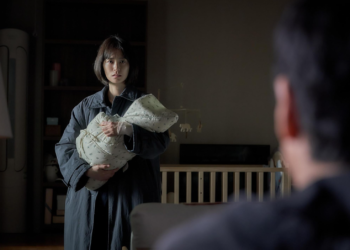
Park Chan-wook’s No Other Choice dismantles the illusion of stability piece by piece, as the familiar promise of rewarding effort gives way to something conditional, even arbitrary. The shift isn’t underlined so much as absorbed, becoming harder to ignore with each turn. Lee Byung-hun builds his performance on restraint, holding Yoo Man-su together well past the point of comfort, even as the belief sustaining him is steadily stripped of meaning.
The film’s tension gathers in small, accumulating details, until control itself begins to register as strain. Park directs with exacting control, treating collapse as process rather than spectacle, while the satire cuts precisely because it feels routine, embedded in systems that no longer pretend to be fair. There’s no softening, no release, only a steady narrowing. Here, desperation settles in gradually, reshaping identity and making compromise feel inevitable, and the film observes it without judgment — or relief.
— Paul Enicola
Ponman
Dir. Jothish Shankar
It’s high time that Malayalam cinema finds broader renown for its unique variety of cinematic realism, and Ponman is yet another case for the same. Set in the coastal regions of Kerala, the movie follows a small family with a soon-to-be-wed daughter who fall short in arranging the sum for her dowry. Desperate for a solution, they find themselves in contact with P.P. Ajesh (Basil Joseph), who makes a living by arranging the dowry gold for struggling families.
Ponman reflects a real-life practice found in some parts of India, and the film uses the arrangement to give a thought-provoking view into Indian society’s values associated with honour, and the myriad of ways that low-income communities have devised to live up to those values. Ponman is neither dreary in its realism nor does it seek to follow the watered-down, preachy formula of Indian commercial social dramas. Backed by stunning but understated performances from all sides, it presents a story where no heroes and villains exist. Instead, all characters are realists trying to live within the demands of the social order. Without slipping away from that typical Malayali realism, it poses gradually escalating stakes that feel dramatic yet punctuated with iconic lines and performances slipping in almost unnoticed.
— Rajiv Prajapati
Presence
Dir. Steven Soderbergh
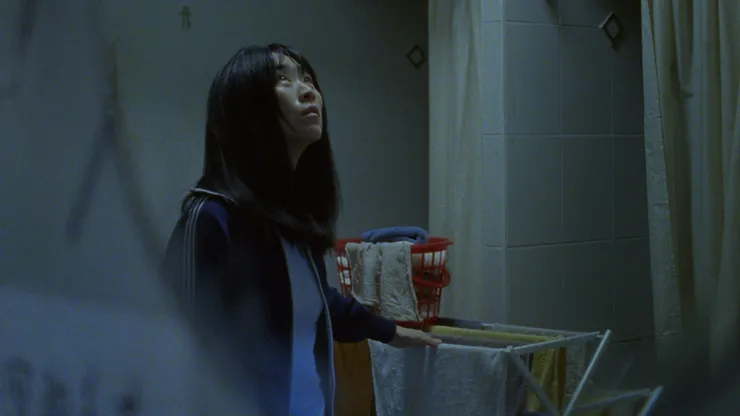
Steven Soderbergh has never been one to shy away from a unique point of view. In Presence, he has the audience sit within the gaze of a ghost sauntering through a young family’s home. The story — familial friction and tension, the halting way in which love is expressed within a family with teenagers, with an Asian mother — is carefully pieced together before us as the ghost looks. Each scene depicts Soderbergh’s spellbinding understanding of the audience’s understanding. The ghost isn’t a mere gateway here, but rather a person whose turns and stillness speak volumes, leave hints as to identity; it’s magical here how such a vivid personhood sews into the film’s way of seeing. We ultimately witness the heartbreaking tale of the younger sibling to an Asian mother’s beloved son, how girls are so often lost within such a dynamic. Presence is an underrated marvel.
—Alisha Mughal
Queerpanorama
Dir. Jun Li
2025 was a really sexy year for LGBTQ+ movies and TV shows, particularly stories about queer men. From the BDSM rom-com Pillion to the glutes-for-days Heated Rivalry, mainstream audiences — for the first time, perhaps, for many — peeked into some of the different sexual dynamics and desires between gay men that was heretofore mostly reserved for the indie, even underground, space. As much as I enjoyed these two titles in particular, and recognize their importance in the grander history of queer media, I remain steadfast in my opinion that the best queer movies will always be those that were made outside the mainstream. Jun Li’s Queerpanorama is just that.
A simultaneous physical and philosophical dive into gay hook-up culture, Queerpanorama is as sexy as it is sensitive. Li blurs reality and fiction, drawing inspiration from his own history and even casting his past hook-ups, to unravel a sexual experience that is quintessentially gay. Queerpanorama is a beautiful film whose style is reminiscent of the free-rein spirit of New Queer Cinema, but also feels decidedly contemporaneous. At the same time, it gestures to the future of independent LGBTQ+ filmmaking, a promise that our stories are safe in the hands of filmmakers like Li.
— Jericho Tadeo
Shall We Dance?
Dir. Masayuki Suô
The recent restoration of Shall We Dance? reminds us why Masayuki Suô’s quiet character study remains so enduring. What begins as a story about a middle-aged salaryman secretly taking ballroom dance lessons gradually unfolds into a gentle reflection on loneliness, routine, and the courage required to pursue joy. Koji Yakusho’s restrained performance captures the innate dissatisfaction of a life lived entirely within social expectation, while the film’s warm humour and delicate romanticism transform dance into a language of emotional release. Nearly three decades later, Shall We Dance? still feels disarmingly sincere, celebrating the first steps that allow people to rediscover themselves.
—Lauren Hayataka
Sons of the Neon Night
Dir. Juno Mak
As divisive as the film may be, it’s hard to root against ingenuity and ambition. With Sons of the Neon Night, Juno Mak goes full force in creating a truly unforgettable cinematic experience. For many, the film might feel like a self indulgent and pretentious exercise that leans too heavily on style over substance — and with a production timeline (including development) that took more than 10 years, it perhaps makes sense that Mak went all in on what is clearly a very singular vision. Yet, this fervour is reflected in the film’s very deliberate boundary pushing for what a Hong Kong film can be. In some ways, the film is steeped in Hong Kong cinema lore, yet also veers into stylistically distant territories. Sons of the Neon Night feels nothing like anything we’ve seen before.
—Wilson Kwong