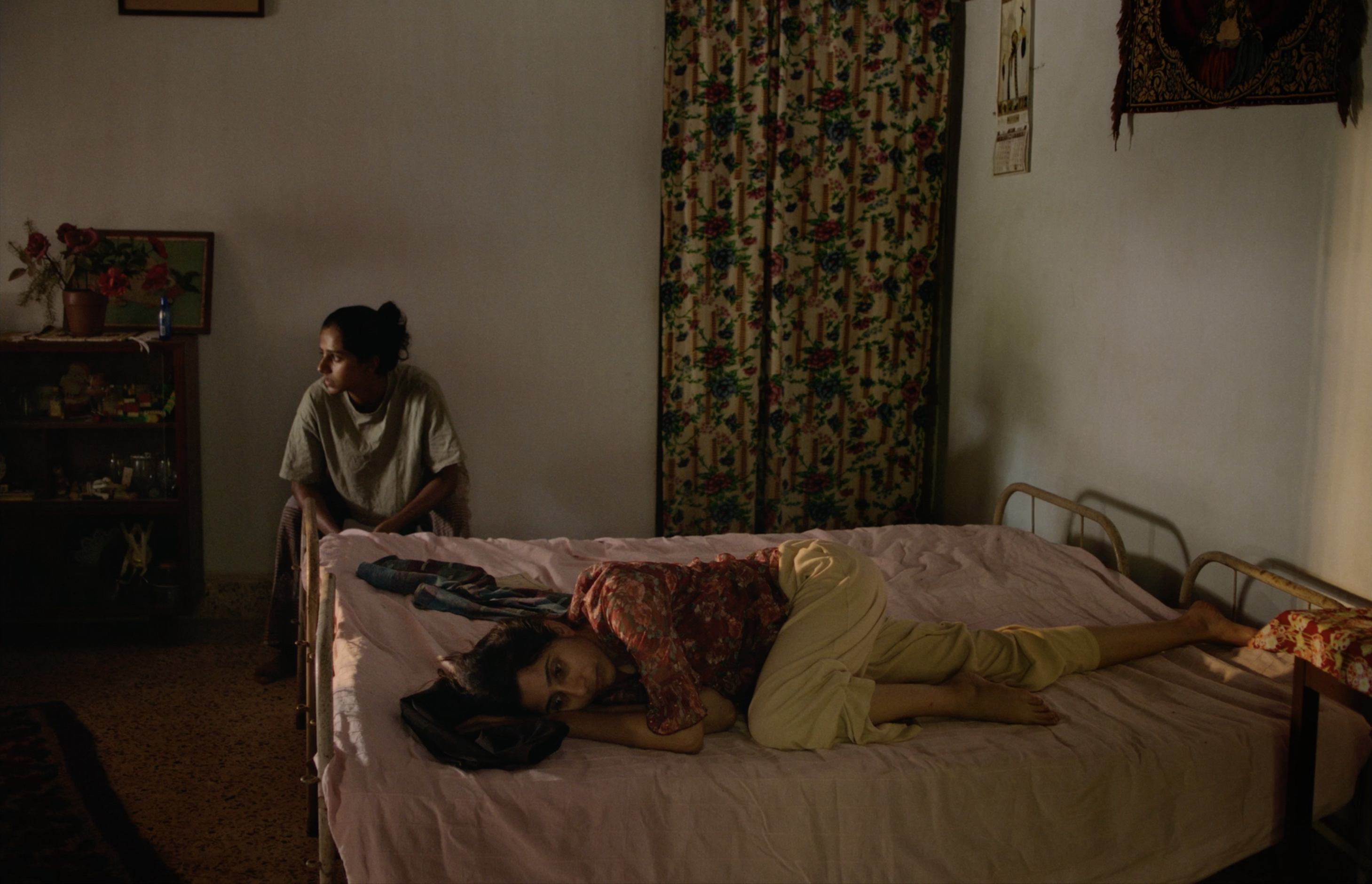
Lee Chang-dong’s Oasis places a love story between an unlikely pairing front and centre. The couple—Jong-du (Sol Kyung-gu), a mentally disabled man, and Gong-ju (Moon So-ri), a woman with cerebral palsy—fall in love despite the judgemental society around them. In the process, Lee turns the spotlight on his audience, particularly the one in 2002 when the film was released. As the characters navigate the uncharted waters of a newfound romance, Lee asks his audience to give these characters attention and witness their growing love for each other without consternation.
Oasis follows Jong-du after his release from prison having served time for a hit-and-run accident. We see how little concern Jong-du’s family has for him: during his incarceration, they decided to relocate without so much as giving him their new address. While the audience sees the family’s disdain toward Jong-du, due to his limited mental faculties, he can’t seem to comprehend this.
Amidst his struggles to reintegrate into society, Jong-du decides to visit the family of the man he killed in the accident. Here, he meets Gong-ju, the man’s daughter who is confined to her family’s apartment. Where Jong-du is shunned by his family for his mental disability, Gong-ju is taken advantage of by her brother, who uses her disability to file for subsidies that only he benefits from.


The initial encounters between Jong-du and Gong-ju, while featuring an act of sexual transgression, marks a turning point in both characters. Jong-du and Gong-ju form a bond, finding solace, companionship, and acceptance in each other. The film’s title makes it clear how the characters see their romance: like an oasis in the desert, a small reprieve from a world of chaos. Lee contrasts the harsh reality of a discriminatory society with the quietness of Jong-du and Gong-ju’s private moments. And even when their families turn against them, both characters maintain a steely resolve not to let go, however unreasonable others think they are.

As has been with most of his films, Lee employs slow and deliberate pacing as well as realism in Oasis. Set against the backdrop of contemporary South Korea, the film chronicles the blossoming relationship between its protagonists as they navigate the challenges of societal prejudice and familial disapproval.
Jong-du and Gong-ju inhabit the fringes of society, their lives shaped by disability and rejection. And backed by Choi Young-taek’s lingering camerawork that vacillates between reflective and intrusive, the film’s scenes unfold slowly, giving viewers ample time to immerse themselves in the atmosphere and emotions.
The ace up Oasis’ sleeve is its unyielding commitment to authenticity and empathy. Lee imbues Jong-du and Gong-ju with a depth and humanity that is both mesmerising and moving. As a result, we take part in the experience; sharing in the protagonists’ simple joys punctuated by promises of inseparability, and in the heartbreaks when the world around them refuses to understand.
On the other hand, Lee’s penchant for a heavy-handed approach persists here. The sexual assault scene in particular underscores a transgressive perversion that makes for a very uncomfortable, and arguably unnecessary, sequence. Moreover, the imaginary scenes where Jong-du sees a healthy, mobile Gong-ju feels quite problematic with how it invites the audience to put a negative spin on their budding romance. Does Jong-du really love Gong-ju or is he simply staying for convenience’s sake?
While it’s easy to consider Oasis as Lee’s most romantic film, making such a case would do the film a disservice. Granted, Lee is seemingly fascinated by the complexities of human relationships, and romance often plays a significant role in many of his films. However, the romantic elements in his filmography are often intertwined with social issues and personal struggles. For example, Peppermint Candy and Secret Sunshine also introduce romantic relationships as central elements of their narratives, but they are presented within the context of trauma, grief, and existential angst. On a lesser note, Burning, while not traditionally romantic in a conventional sense, tackles obsession, desire, and longing through its central love triangle.
That being said, Oasis stands out as Lee’s most hopeful film. It explores themes of love, romance, and acceptance between two marginalised individuals while providing social commentary, and does so in a profound and oftentimes-unflinching way. Whether or not the audience agrees with how Lee ends the film, one thing is certain: we share the wish that the characters will make it work, come hell or high water.
At its best, Oasis is a searing indictment of a society that too often dehumanises its most vulnerable members. Through Jong-du and Gong-ju’s story, Lee Chang-dong shines a harsh spotlight on the injustices and inequalities that pervade Korean society, forcing audiences to confront uncomfortable truths about the nature of privilege and prejudice.
‘Oasis’ screens at Metrograph in New York City on April 19 as part of the theatre’s retrospective series, Novel Encounters: the Films of Lee Chang-dong. Check out the official website for more details.