The proximity between a documentary and its subject is an interesting topic: some benefit more from having a certain remove and distance, while others thrive more the closer they get. The close, deeply personal scope we get with Black Box Diaries is particularly notable as the subject herself, Japanese journalist Shiori Itō, has taken it upon herself to produce and direct this documentary, which is of her investigation into her own sexual assault case. It is a heart-wrenching but ultimately cathartic journey that we follow Itō on as she resiliently pursues the case against all manner of adversities, taking it upon herself to tell her own story through the medium of the screen, having previously written and spoken extensively on it, including through a bestselling non-fiction book of the same name.
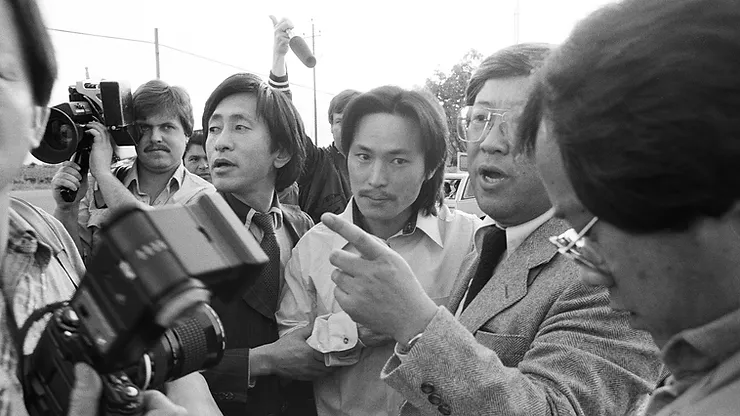
This personal aspect makes it particularly harrowing (the film opens with a trigger warning for victims of sexual assault), as Itō documents the details of her case against Noriyuki Yamaguchi, a journalist and biographer of Japan’s former Prime Minister Shinzo Abe. The structure is that of a procedural that takes us through the various steps of the horrifying evening, which might have felt exploitative if not guided by the skillful hand of Itō herself. She doesn’t shy away from the raw, unfiltered mess of emotions she endured as she experiences the wear and exhaustion of her trauma, and the complicated situation she found herself in when deciding to take her case public in a press conference in 2017, amidst a society which tends to pressure victims into shame and silence.
As the right decries her as a threat to bring down the Abe government and the left hails her as a hero, Itō finds herself in a spiral of hate mail and cyberbullying that further challenges her resolve and impacts all aspects of her life. A particularly poignant scene sees her ruminating over how the Japanese blossom season no longer brings her joy, reminding her of the rape that had taken place over that period, irrevocably changing her life. By showing us both the personal and public scope of the case, the documentary shows how it all continually pushes her to her limits, wearing her down.


Nevertheless, Itō persists, seeking not only justice for her own case but also that of the many other victims of Japan’s antiquated sexual assault laws. Editor Emma Ryan Yamazaki weaves together all these aspects into a coherent, eloquent piece where the intensity and emotional potency of her predicament are never lost. They let the telephone conversations she takes with the authorities and potential witnesses play out in excruciating detail, as we experience with Itō the pain and hopelessness of the situation, but also the moments of breakthrough and catharsis when progress is made. Itō’s video diaries, interspersed throughout the film, allow us to know her more personally, and also let us share in her moments of levity and respite, such as her interactions with friends, and moments where she experiences the generosity and kindness of others. A particularly moving sequence comes in her talk with other victims of sexual assault where she talks of feeling naked when speaking in public generally, but how they make her feel like she is shielded with blankets from the abuse hurled at her by many others. The solidarity that she builds among other women and the resolve she gains from it is an emotional strand that drives her work throughout and is powerfully evoked from the footage we see.
In her director’s statement for the film’s press notes, Itō has reflected on the title of “black box,” which she defines as a system of not readily understood or hidden workings, and that her film is intended to be her own very personal “black box” to the world: “the story of one woman’s experience—my black box, laid open for all to see.” Since the release of Itō’s statement, she has continued to push for the reform of rape laws in Japan and embraces the agency she has had in getting to tell her painful story to the world. The film concludes with a warm, cathartic needle drop of “I Will Survive” followed by a contemplative moment of silence. Both are necessary as a celebration of work that has been done and an understanding that there is still more work to do.