The short answer is that Netflix’s premiere season of Avatar: The Last Airbender is as good as you can expect any live-action adaptation of a beloved anime series to be: it was never going to be a perfect translation — nothing will ever beat the original – but it stands firmly as an entertaining and, more importantly, intentional interpretation of a fantastical story built upon Asian and Indigenous cultures and traditions.
Avatar: The Last Airbender sees a world of four countries, each corresponding to a different element (the Water Tribe, the Earth Kingdom, the Fire Nation, and the Air Nomads), suffering a century-long war that started when the Fire Nation began invading everyone else. In this world, there are “benders” in each country; people who have the ability to manipulate their cultural element. Only the Avatar can master all four elements, and it is their duty to ensure peace and harmony during their lifetime (when the Avatar dies, they are reincarnated in the next country/element in the cycle).
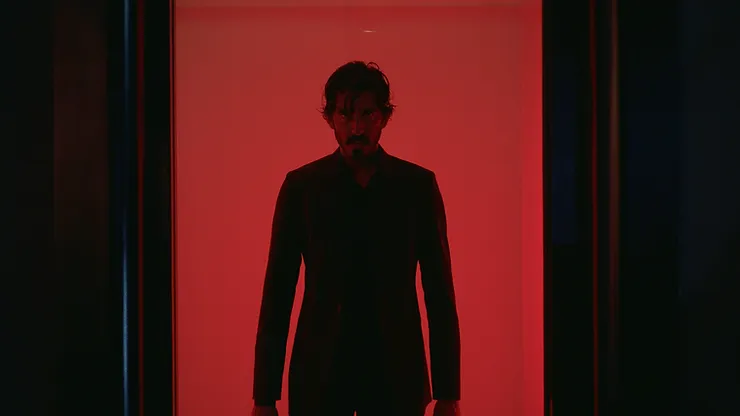
The latest Avatar is a 12-year-old airbender named Aang (Gordon Cormier), who was inadvertently trapped in an iceberg for the last 100 years. When he emerges, he learns of the Fire Nation’s campaign for world domination. Joined by two Southern Water Tribe siblings, a waterbender named Katara (Kiawentiio) and a wise-cracking warrior named Sokka (Ian Ousley), Aang ventures to the North, where he hopes to not only continue his training and master waterbending, but also save the Northern Water Tribe from an impending attack by the Fire Nation. Hot on his tail, however, are Uncle Iroh (Paul Sun-Hyung Lee), a retired general, and the banished Prince Zuko (Dallas Liu), a fierce firebender who needs to capture the Avatar in order to be able to return home and regain his honour.


Showrunner Albert Kim retains the same spirit of Michael Dante DiMartino and Bryan Konietzko’s original anime, but also takes a more mature approach, rendering the Netflix show both familiar to and updated for its long-time fans (after all, most of those who watched the animated show on Nickelodeon in the mid-2000s are now in their 30s). Indeed, Kim’s series doesn’t shy away from showing us the darker shades of this world, such as Fire Nation’s cruelty — in the opening sequence alone, a man is burned alive — or the genocide of the Air Nomads. All of these horrors were implied in the Nickelodeon anime, but, here, they are front and center, giving us a grittier perspective on a world decimated by hate and violence.
In fact, one of the biggest updates Kim’s Avatar: The Last Airbender offers is its emphasis on war and trauma. Every core character bears some sort of scar as a result of the war, and the series makes it clear that wounds, both physical and emotional, are the driving forces behind their actions. In terms of streamlining 20 half-hour episodes from the source material into eight hour-long ones, this approach, to an extent, works in the show’s favour: seeing life and death-onscreen allows the stakes to remain high as we are propelled towards the climactic battle at the North Pole.

In this regard, the young cast deserves praise for shouldering the emotional weight of their characters all season, particularly Liu, whose impressively layered performance as the oft-conflicted and hot-headed Zuko shows undeniable promise as a young actor. Not all of the characterizations are as strong as Zuko’s, unfortunately, and some of the actors’ performances feel stiff at times, but this is more so a sign of negligent direction than bad acting. In truth, it’s uplifting to see such talented Asian and Indigenous actors sharing the screen, especially young ones who paint such a bright future for our representation on-screen. They tackle their roles — and, for that matter, stunts — with grace and gusto.
Where the Netflix series falls short, however, is capturing that which made the Nickelodeon anime so resonant and successful in the first place: a balance between light and dark, life and death, joy and sadness, love and war — which is ironic, considering the Avatar’s whole ethos is the pursuit of harmony. The live-action adaptation shows us a world where citizens are increasingly divided, where hateful rhetoric breeds hateful violence, where the genocide of an entire culture and people goes unchecked and unpunished, and, ultimately, where all hope is seemingly lost. There are tiny moments of tenderness and humour between the characters, but they often feel like half-baked ideas when compared to the tightly executed action sequences.
This isn’t to say Netflix should copy and paste the Nickelodeon anime’s signature humour. In fact, the opposite, especially since the live-action adaptation shines when it treads its own path. For example, in the episode, “Into the Dark,” Katara and Sokka are trapped in a cave, and must learn to put their differences aside in order to get out. In the anime, however, it was Katara and Aang who were trapped in the cave, and this episode helped pave the way for their romantic subplot. The overarching idea of “love being brightest in the dark” remains the same in both versions, but the Netflix show adds a much more interesting dimension to the Water Tribe siblings’ dynamic.
All in all, anime inherently sets the bar high for any live-action adaptation. There are certain sensibilities that just can’t be translated into three dimensions. To expect Netflix’s series to surpass the original is unfair and only sets viewers up for disappointment. The fact is: Avatar: The Last Airbender is an entertaining and thoughtful series, but only if you let it be. Just as Aang spends the season learning to separate himself from the avatars that came before him, audiences, too, must allow the Netflix series to stand on its own. It’s not the original anime, which is fine, but it’s also not like M. Night Shyamalan’s disastrous The Last Airbender, which is a huge relief.