It isn’t easy putting on a film festival — just ask Aram Collier, the Artistic Director of the Toronto Reel Asian International Film Festival. Though the festival’s upcoming 28th programming (which runs November 13-24) is set to feature some of the most interesting Asian movies of today, the road wasn’t always the smoothest. Just last year, in fact, Reel Asian faced a last-minute budgetary crisis that almost resulted in a different kind of festival programming.
In our Zoom interview, Collier notes how Reel Asian is far from the only film festival, or arts organization in general, to face some sort of hardship, financial or otherwise, but he is deliberate in looking at the brighter side of things. Indeed, in Reel Asian’s time of need last year, the institution reached out to the public — perhaps in a somewhat unprecedented move — asking followers and film fans alike to donate what they could so that the programming could continue as planned. And it worked: the donations poured in, and the festival met its $50,000 goal in just two days.
For Collier, this was a sort of confirmation of faith in film audiences: “We are so thankful for the community and the support that has sustained us over these years,” he says, “and it’s a reminder that [community is] what’s going to continue to sustain us.”
Collier began his career at Reel Asian in 2005 as the Communications, Outreach, and Volunteer Coordinator. He initially left after two years and returned in 2011 as Industry Series Coordinator, before eventually moving up to Director of Programming and Education from 2012 to 2016. Also a filmmaker, producer, and film educator, he worked at other major institutions like CBC and TIFF in between these roles — he even released his directorial debut, Stand Up Man, in 2017 — before returning to Reel Asian as Artistic Director, a role he has fulfilled since 2019.
In effect, Collier has witnessed first-hand the upward progress of Asian representation in post-Crazy Rich Asians media. More recently, and more significantly, he noticed a “shift [away] from ‘capital-I’ identity or trauma-based narratives,” particularly with this year’s film submissions, which proved an exciting experience for him and his co-programmers when putting together the film slate.


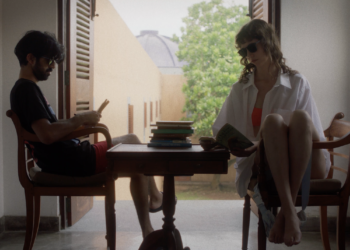
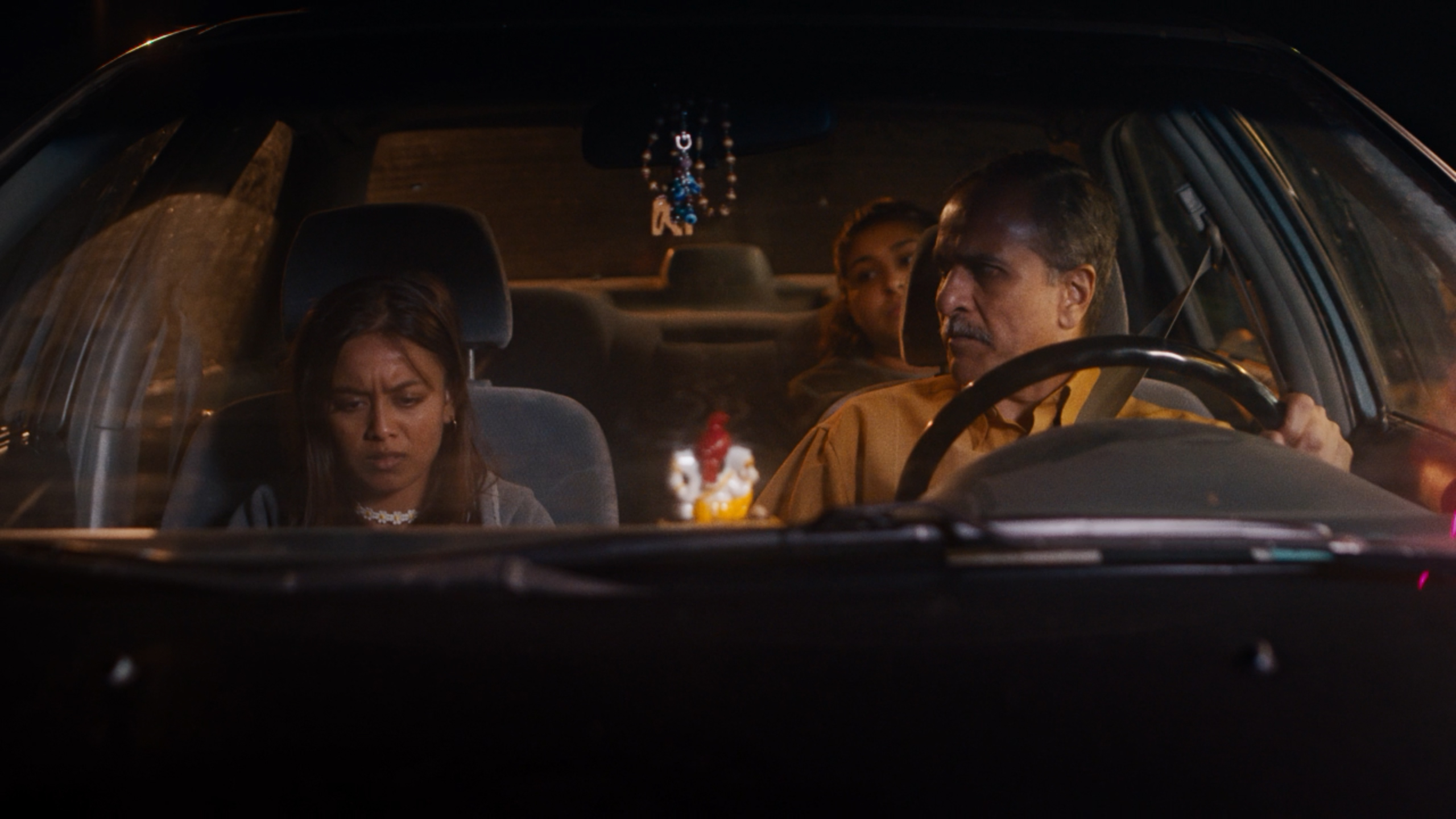
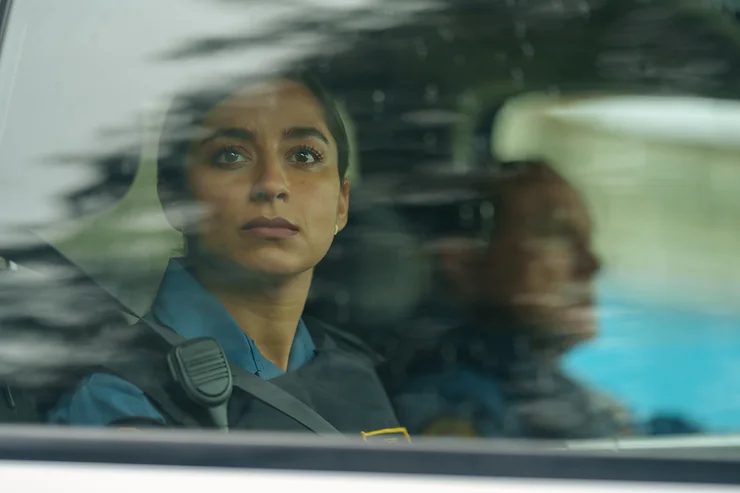
Specifically, Collier singles out Meelad Moaphi’s His Father’s Son (a Centrepiece Gala Presentation title, in fact), Gillian McKercher’s Lucky Star, and Ann Marie Fleming’s Can I Get a Witness? (the opening night film) as prime examples of Asian filmmakers and narratives that seek to offer “a different pathway” to identity films. “Cultural aspects are very relevant to the story, but it’s not the fulcrum of it. [The films] aren’t asking, ‘What does it mean to be this in this Canadian society?’, but they are still dramatic stories, finely told, well-acted, and the kinds of things we want to see right now.”

If there’s a film in this year’s programming that resonates with Collier the most, it’s Choy Ji’s feature directorial debut, Borrowed Time. “It’s a film from China, and it’s about a woman who is about to be married, and she’s going to Hong Kong to try and find her father, whom she never met because her father had an affair with her mother in mainland China,” he describes. “It’s quite unique in that — my family is Cantonese — it’s a Cantonese-language film about Hong Kong, but not from Hong Kong.”
Collier also urges festival-goers to check out The Glassworker, from Pakistani filmmaker Usman Riaz. “We rarely show animated feature films because they’re so rare and they’re so hard to produce. Usually, major studios [produce them], but Usman has been working on this for 10 years. Pakistan does not have a huge animation industry, so they built it themselves to make this film.”
When it comes to curating Reel Asian’s festival programming, Collier says the process of evaluating every filmmaker’s submission never gets easier, especially when films like The Glassworker have great personal stories embedded within their production. On top of that, the festival covers not only Asia as a continent, but as a diaspora, too, which means films pour in virtually from all over the world. The biggest question Collier says that he and his co-curators ask themselves is: “How do we put out something that we want to be seen and we feel has value?”
“We try to make it less of a buffet table of ‘something from everywhere,’” he adds. “Regional representation is something that we do think about, but we try to have it be more like a taster’s menu — a chef’s menu — in that we hope there are some films that are pushing boundaries, but there’s also some things that are more like your comfort dish.”

While the focus right now is naturally on the upcoming festival programming, that doesn’t mean that Collier and the rest of the Reel Asian team aren’t looking ahead at the festival’s 30th anniversary. “What does it mean to look back?” is certainly a question at the forefront of their thinking. “It’s important to realize the progression and continuing to have continuity in terms of people who have experienced Reel Asian, who are engaged with it — not just staff, but audience members as well.”
“The amount of Canadian features we are able to evaluate now — that we even have a choice to program now — is light years different than when I started,” he says. “We would struggle to find one Asian-community feature, even show, or to even evaluate whether or not we could show it.”
Even now, with the uncertainty of film’s (and the arts’) future, the ever-changing industry, and the ever-evolving relationship between film exhibition and audiences, Collier maintains pride in Reel Asian’s efforts to push the needle where Asian cinema is concerned. “These films are great, and they’re worthy of being shown. As a Canadian, I’m happy to see that. Not even with my artistic-director hat on, my broad hope is that [Asian filmmakers] still continue to be able to make work, have opportunities, and find their people, find their audiences. And, hopefully, Reel Asian is part of that picture of making that happen.”
The 28th edition of the Toronto Reel Asian International Film Festival runs in-person and online November 13-24. For tickets, scheduling, and other details about this year’s programming, visit the festival’s website.