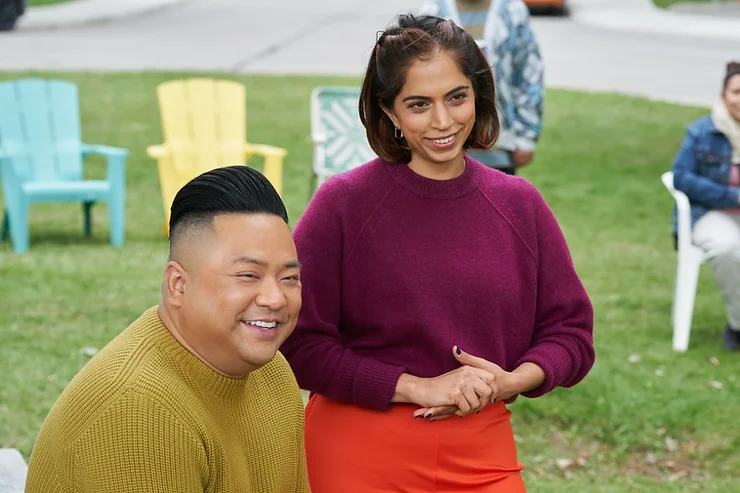
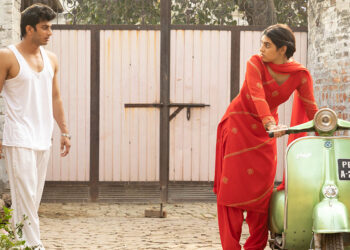
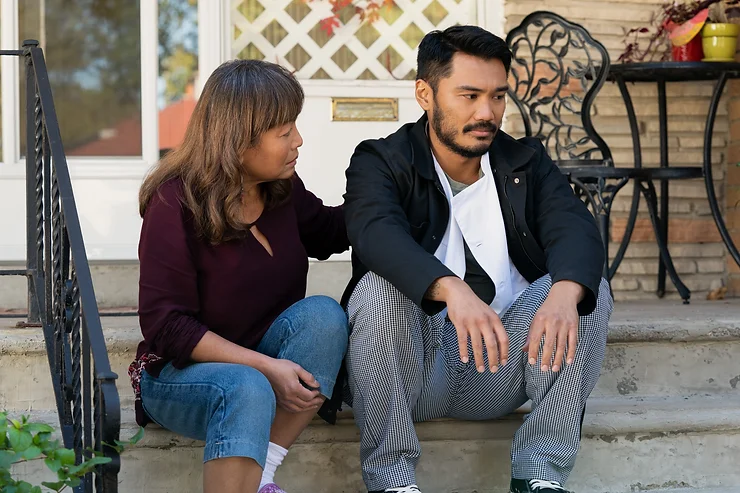
There is a scene in Season 2 of Sort Of wherein Sabi Mehboob’s (Bilal Baig) father Imran (Dhirendra) is rolling on the family’s emerald green lawn somewhere in Rexdale (in the Greater Toronto Area), deliriously drunk, as his wife Raffo (Ellora Patnaik) pleads with him to get up, to come inside. Daughter Aqsa (Supinder Wraich) looks down over him in the kind of shock that leaves one emotionless, at a loss for words. Sabi’s family is Muslim Pakistani Canadian. Drinking is generally culturally frowned upon in Pakistani Muslim families, but the show never once passes a negative judgement over Imran, even as it has plenty of reason to: Imran has hurried over to his wife and children in Canada from Dubai after Sabi is outed by their cousin.
Sabi is gender fluid, and this term isn’t one their parents know how to use. The show’s first season had Raffo reckon with her child’s identity, eventually coming to terms with it and accepting Sabi unconditionally. Season two of Sort Of looks at, among other things, whether and how Imran processes his child’s identity, and for the first half of the season, Imran doesn’t take it well, convinced that he can “fix” Sabi. You see, the show, anchored as it is in Sabi’s perspective, has every reason to pass judgment over Imran as he lies belligerently drunk on his lawn. Heck, even I wanted for the show to play up jokes against Imran, angry as I was at this stiff patriarch — the scene is horrifyingly familiar to me personally, as if ripped from my own adolescence. But Sort Of extends a gentle kind of grace to Imran, showing us that it understands the stress Sabi’s delicate confidence in being in the world causes him, the shock of the newness of it all; in Pakistan, it can be dangerous for gender fluid and other marginalized folks to be out in society, because mainstream culture’s attitude toward anyone who strays from the status quo is overwhelmingly intolerant.
The grace extended to Imran is Sort Of’s running theme, modus operandi, its gift to us. There is an endless well of love and trust at the core of Sort Of, the kind of love and trust that allows its creators to immediately submerge us in the lives of its characters, each one of whom feels so real I feel like I can touch them. Often we are plopped in the midst of action, events already unfurling, but it isn’t jarring for how lived-in the characters feel — the show’s commitment to Sabi’s in turn warmly calm and aghast-as-we-are perspective has this curious effect of having us feel at ease, we can trust that things will be explained in time, and if they’re not, then at least we have Sabi and the new friends we’ve made on screen. The characters here have lives so impossibly complex it’s jarring at times to recall this is just a TV show, not events we’re witness to happening to our real-life friends, to us.


In season one, creators Baig and Fab Filippo showcased their shrewd storytelling prowess, exploring the various lives untangled and tangled in the undertow of the hospitalization of the inimitable Bessy (Grace Lynn Kung), a mother of two, a wife, a friend to and employer of Sabi, and a vibrant force unto herself. Season two is a kind of homecoming, looking at how Sabi’s and their friends’ lives are impacted by Bessy’s recuperation and Imran’s return. Baig and Filippo are clarion-eyed as they explore how various psyches are impacted by singular events, forging of the second season a masterclass in empathetic characterizations.
The show explores such intensely complex relationships in equally intensely complex ways; I defy you to find traditional archetypes here. No familiar types follow familiar paths, at least not the paths we have seen traversed on screen before; they are, rather, characters you and I might be familiar with for having grown up with them. So much of this show feels like being a part of something, being allowed to be a part of Sabi’s life. Often, we feel the electricity of Sabi’s excited nervousness as they sit near a cute boy, or we feel their nervousness as they wait for a text from their hot but flakey crush. We feel, too, their exhaustion at Imran, who keeps bringing up the tired old conventions of heteronormative marriage. But undergirding Sabi’s tiredness is a kind of confidence that reminds me of my sister’s, a kind of confidence that is subtly revolutionary and impossible to ignore, one that so many of the first-generation Canadian people I know and love possess. Characters are revealed to us in bursts, in that organic way we see in real life wherein people peel off their layers more and more until they become our loved ones.
This show is bold, expansive, funny, and heartbreaking; it’s incredibly well-written and realized, groundbreaking and beautiful, but more than all this wonderfulness, Sort Of is something I can show to people when I feel too exhausted to explain my existence. This show makes me feel lighter, like I have one less thing about myself that I need to justify or explain away. But at the same time, its story is deeply its own because of Baig and Filippo — Sabi and those around them are unique and fallible. The showrunners here in no way aim to create a story about Pakistani Canadians that strives to be the be-all and end-all of representation. Sabi’s journey is simply one among many ways to be for a first-generation Canadian, the show seems to say, simultaneously paving the way and leaving plenty of room for other voices to chime in, to feel comfortable to be vulnerable enough to share experiences, art, happinesses, and tribulations.
Oftentimes, people talk of representation obliquely; there’s an airy remove about their words, as if they’re merely observing without feeling the atmosphere of the movie or show wash over their skin, tousling their hair, stinging their heart. It’s tough not to be affected by Sort Of. When I talk about how important Sort Of‘s representation is, I mean this with the whole of my being, because I see something visceral about myself reflected back to me by Sabi and their family.
In Sort Of, we are shown meaningful solutions, a kind of resolution to immense breakages and problems that allows me hope. Relationships are worked on; Sabi and those around them perform that difficult labour of growth. We see a father trying his mightiest not so much to understand but to convey his love for his child. There has never before been a show that feels like home to me, the grooves of its plot intuitively familiar, as if following my own history. This show is the first time I’ve ever felt seen and validated, and for this reason, Sort Of is revolutionary, among the year’s greatest gifts.