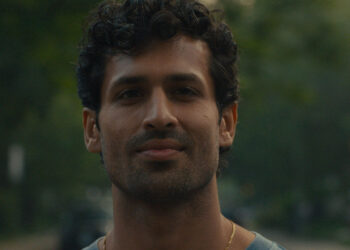
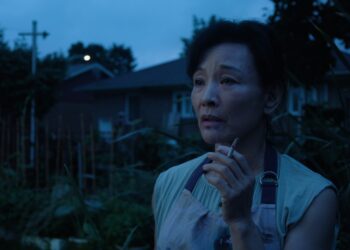
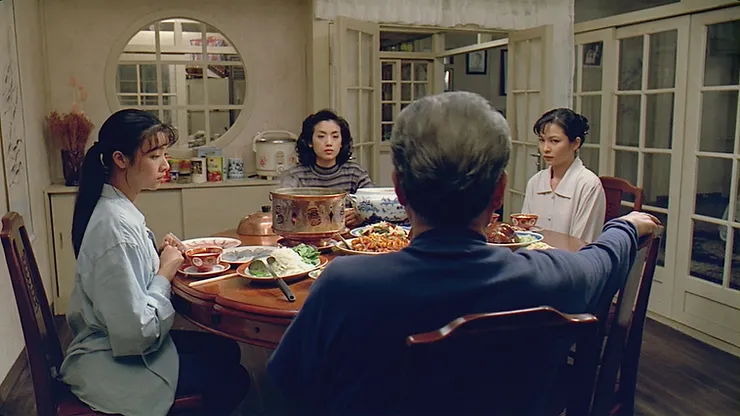
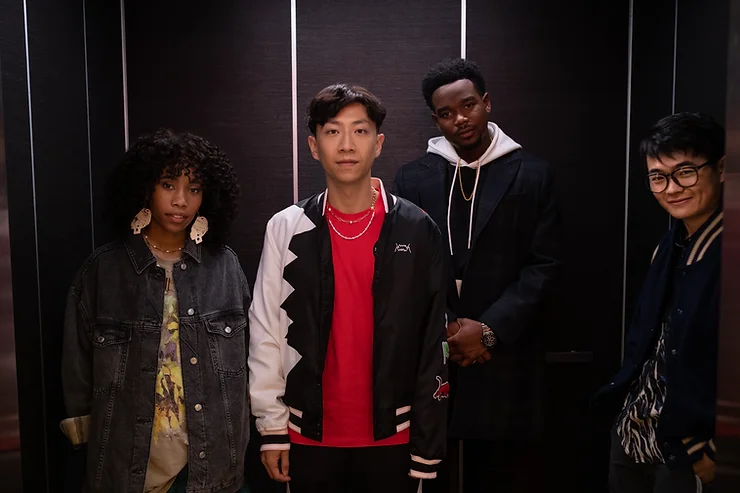
“Hey, thanks for paving the way, man,” actor Saamer Usmani says to his co-star Bernard White, partly in jest but undoubtedly with an undercurrent of genuine gratitude.
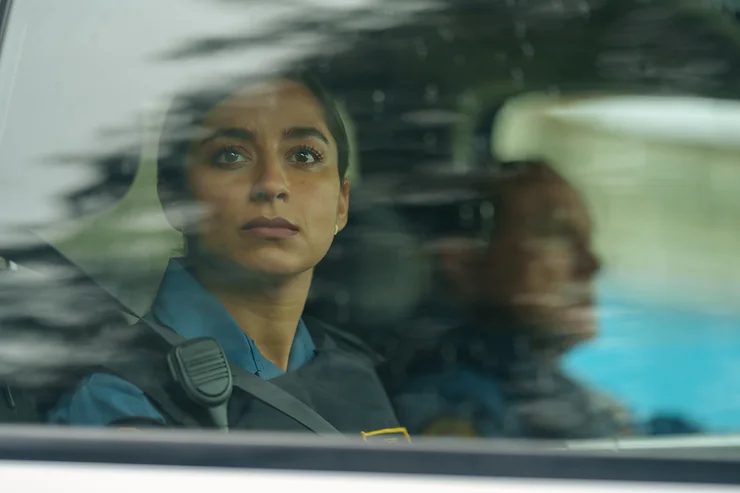
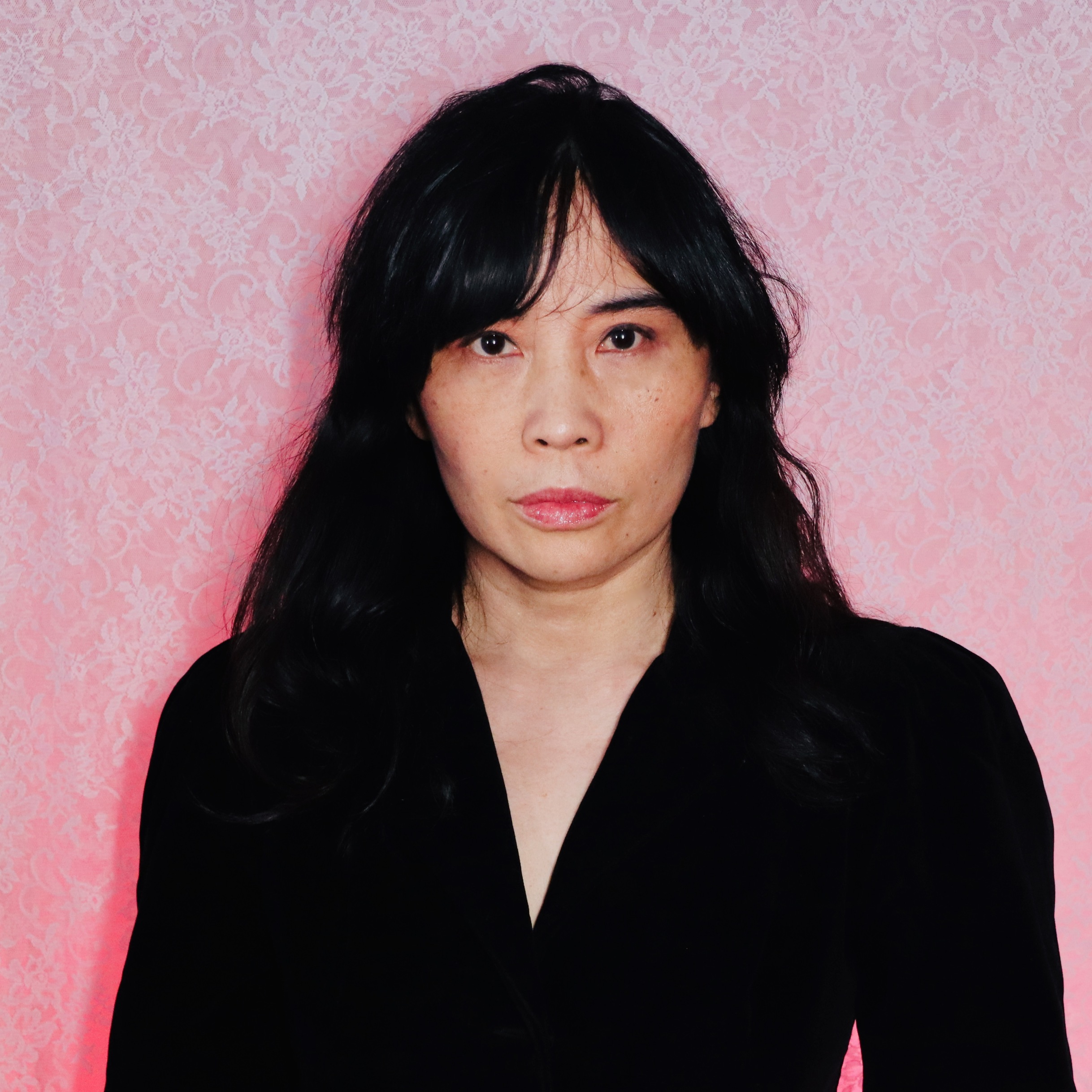
White, Usmani, and I are discussing the doors that White and his generation opened—sometimes not always in the way they wanted—in order for a movie like Shook to be created. The directorial feature debut of Amar Wala, Shook expanded upon Wala’s 2018 short film-of-the-same-name and had its world premiere at last year’s Toronto International Film Festival as part of the festival’s Discovery section.
A veteran of television and film, White takes a more earnest beat in his response: “I want to say, ‘thank you,’ back. I think this younger generation doesn’t take shit. And because they have a little stuff and there’s a refusal to do ‘the thing,’ I feel like I’ve benefited from what they’ve done.”
I spoke with White and Usmani, who play father and son, respectively, in the film just ahead of their premiere. Since September 2024, the movie has made its way throughout the film festival circuit and received favourable reviews. Starting today, the film returns home and finally sees a theatrical release in Canada through Elevation Pictures.
Set in Scarborough, Ontario, Shook finds Usmani’s Ashish (“Ash” for short) at a cross-roads. An aspiring writer, Ash feels stuck, wanting to pursue his dreams in earnest but struggling to make it actually happen. Adding to these frustrations, his father’s Parkinson’s diagnosis places a complicated responsibility on Ash given their estrangement following his parents’ divorce.

Shook’s coming-of-age elements find a universality, whether it’s the mounting pressure of what to do after graduation, changing familial dynamics, or the shift in the child-parent relationship when the former becomes caregiver to the latter. Wala, who co-wrote the film with Adnan Khan, centres Shook’s world around a South Asian-Canadian family, and in turn South Asian diasporic culture.
“It’s becoming more and more where it’s not leading the conversation,” White says of the film’s racial specificity. “These [characters] could be anybody.”
To get here, though, White and his contemporaries, at times, made compromises in the roles they accepted— “the thing” as he calls it when responding to Usami’s gesture of thanks.
White recalls working on a sitcom circa 1984 where he played an Arab sheikh who romantically pursues a white girl. “Full-on camel jokes and wearing a turban,” White remembers. While White could be forgiven for being embarrassed or even dismissive of those previous roles, he takes a different view.
“I’ve been lucky in my life where I have played many ‘minorities,’” he laughs (earlier in our conversation he stated his dislike of this word: “It’s a really demeaning word, isn’t it?”). “I don’t know. I just hope to never look at it in that way. The culture may think one thing of it, but I see it as a [character] who’s this—a person who comes from that.”
It’s making lemonade out of lemons. White has been working as a professional actor since 1983 and has surely faced his fair share of challenges, but he continued to persist and work; and now he’s here, answering questions about a heartfelt film that turns its focus on a South Asian family—certainly not an anomaly in the actual world, but a rarity on-screen until recently.
Even Usmani, an emerging actor best known for his role as Prithviraj Varma in last year’s Netflix series 3 Body Problem, has noticed a change in the comparatively short time he’s been working as an actor.
“I remember the things I was auditioning for at the very beginning, in the aftermath of 9/11 and all that,” says the actor. “That seems to have fallen out of favour with Hollywood a little bit.”
Wala, Usmani, and other young filmmakers lead the charge in this changing landscape. Actors and stories once deemed a risk are now the ones in demand in Canada, Hollywood, and across the West. White understands the part he played in this revolution; however, he firmly points to these revolutionaries as having paved the way in their own right.
“They say I kicked the door open a little bit, but I feel like they have the chutzpah.”