Representation and cultural appropriation often go hand in hand when discussing the entertainment industry. It’s, of course, a positive sentiment: instead of taking and benefiting from another group’s culture while gate-keeping that very group’s entry into the industry, let’s make room at the table for them.
But here’s where things get tricky. Are filmmakers now forced to only write about their gender, race, religion, sexual preferences, etc.? Isn’t that just still gate-keeping under the guise of diversity?
Consider Academy Award Best Picture winner Nomadland, a film about an American white woman who lives a nomadic lifestyle in a camper trailer. It’s a sweeping look at a subculture that lives off minimal means in a country with unspeakable wealth. Nomadland was directed, written, produced, and edited by Chloé Zhao — a Chinese-born, British-educated daughter of an executive to one of China’s largest state-owned steel companies. Zhao, who also picked up an Academy Award for Best Director for the film, couldn’t be further from Frances McDormand’s Fern. But yet, Nomadland is considered to be an authentic depiction of this community and has been heavily rewarded for it. If we were to play by such extreme rules surrounding cultural appropriation, Zhao wouldn’t have been “allowed” to pursue Nomadland. And yet being a foreign-born, Asian woman, Zhao has the profile of a person these current discussions about diversity are meant to help.

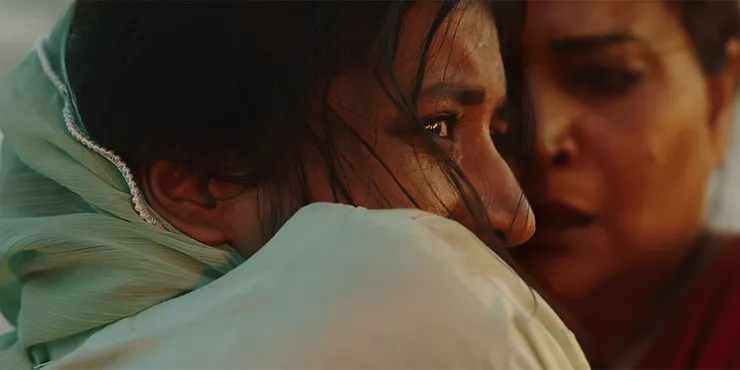
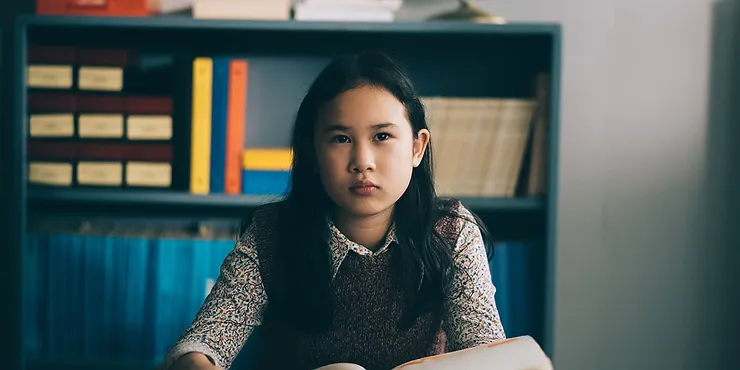
It’s this paradox that Canadian director Andrew Chung wanted to explore in his feature film White Elephant, a film about a high school-aged South Asian girl, Pooja (Zaarin Bushra), trying to reconcile her Indian heritage with her Canadian upbringing. Pooja isn’t completely dissimilar to Chung’s lived experience, as a Canadian-born Hakka-Chinese; many of the dilemmas she faces were his own. But still, he faced some initial push back from other writers and producers.
“When I first wrote the script, I sent [it] to a lot of South Asian writers and producers. The feedback was interesting to me. I got some adverse reactions from it. I had South Asian writers tell me, ‘Why are you writing about Indian characters?’” Chung recalls. “I could sense the offence. The second question was, ‘Why a female character?’ from female writers and producers. I could already sense very quickly the knee-jerk reactions, and that’s where I [think] the pendulum swings too far.”


A slight twist to this is the fact that Chung’s parents are Indian-born Hakka-Chinese, and he grew up in predominantly South Asian neighbourhoods. So, his proximity to South Asian culture is stronger than most non-South Asian people: “Once I told the South Asian writers and producers that I had sent the script to, that my parents were from India, the conversation was done. They no longer had any argument about it. It was funny to me how you jump to conclusions when you don’t know anything about the artist. You just see the Chinese name and you think, ‘How dare he write about the South Asian community. He’s not even South Asian.’ Not realizing that my parents are actually from India.”
White Elephant began as a short film as a part of an exhibition at the Varley Art Gallery in Markham, Ontario. The exhibition’s theme was artists exploring communities that weren’t their own, which is what attracted Chung to submit a piece. “I thought it was an interesting thing for me to approach from an artist’s perspective. I was curious, as an artist, to be on the other side of that conversation and tackle a community that was not necessarily my own,” remembers Chung. “The idea of appropriation is obviously a conversation everyone is having, but are there limitations to that? What artist is allowed to write a female? A disabled character, an autistic character — a character that is not from a community that’s theirs? I wanted to explore that a little bit. That’s what drove me to the exhibition.”
“[I was] very cautious about being authentic. It’s not just about just taking a community and [writing about them] based on whatever your feelings are towards them. So it was very important that we involve the community,” explains Chung. “I chose the South Asian community because I felt that I was a lot more entrenched in that community based on the way I grew up and the area that I lived in. It was a culture that was very adjacent to Chinese culture. And I grew up with Indian cultural customs in my household because [of] my parents. They are just as Indian as I am Canadian, in a lot of ways. I was very familiar with the community [and] I thought I could portray it authentically.”

And that’s the name of the game: authenticity. Representation doesn’t have to have the effect of pigeon-holing any filmmaker, regardless of their cultural makeup and background. But if filmmakers want to explore other communities and experiences, they have to respect the culture and strive to be as authentic as possible. Put simply, they have to put in the work.
For Chung, it’s about not judging a film simply by who the main characters are compared to who the director is — it’s about looking deeper into the piece: “It was important to me to choose a community that I felt like I could authentically portray. There is a part of my identity that is closely linked to the community that I’m telling the story about. I would never say anybody can just tell the story of any community. I would want to know, what’s the history of this artist? Why? What’s your intent? Did you put in the work? Were you actually respectful to the community? Did you involve them? Did you collaborate with them?”
It’s incredibly encouraging to hear up-and-coming filmmakers like Chung speak in these terms. If you spend any amount of time on film Twitter, you’ll quickly see that there is a lot of discourse calling out cultural appropriation in film. While raising these topics for discussion are necessary, it isn’t black and white, which is why having filmmakers like Chung is so important to the industry — a reasonable voice that understands the importance and necessity of representation of various communities and also sees the grey in that conversation.
“I think a lot of people are not thinking enough about the nuance behind art,” Chung says. “And they’re just reading a lot of the conversations that are [happening] online and we’re having a lot of knee-jerk reactions without understanding what the artist’s intent is and where the artist comes from.”